

The benefits of time in the market rather than timing the market are widely acknowledged in equity investing. Yet the portfolios of too many growth equity managers get influenced by short-term signals, benchmark pressures or market momentum.
The philosophy of the Growth Equity Strategies (GES) Team at Loomis Sayles is deliberately different. “We are long-term investors in businesses, not stock traders,” said Aziz Hamzaogullari, Founder, chief investment officer and portfolio manager of the GES Team. This is a distinction that has shaped the Team’s process for nearly two decades and one which it believes is central to delivering consistent, positive, risk-adjusted outcomes over cycles.
The GES Team’s investment behaviour demonstrates that commitment. Since inception, the Large Cap Growth strategy’s annualised turnover is just 11.3% – far below most peers. Nearly half the holdings have been in the portfolio for 10 years or longer, something that only a handful of managers globally can boast. And importantly, over the long holding periods, the median size of the GES portfolio positions is roughly three times greater than peers.
This combination of patience and conviction sharpens the focus on allocating capital where the GES Team sees the strongest long-term durable, compounding growth potential, rather than continuously rotating exposures.
Vision with discipline
In short, the GES investment process is anchored in a proprietary fundamental framework built on three pillars: quality, growth and valuation.
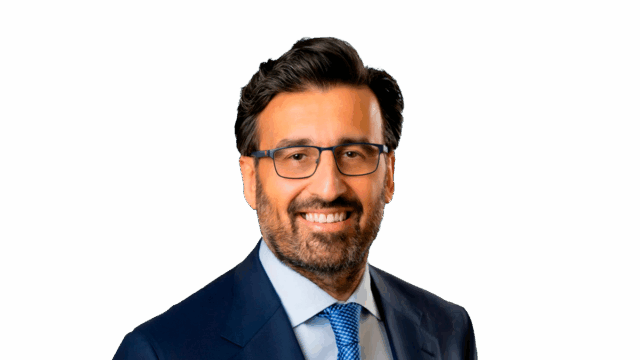
“Quality and growth define what we want to own,” explained Hamzaogullari (main picture), highlighting key attributes of these businesses, such as durable competitive advantages, structural and profitable cash flow growth, and the ability to compound their advantages over a decade or more.
“But valuation determines when we invest,” he added. “Even the highest-quality companies must be purchased at a meaningful discount to our estimate of intrinsic value to create an attractive reward-to-risk profile.”
While straightforward in principle, this discipline is difficult to execute consistently. It requires deep fundamental knowledge, emotional control and a willingness to act counter-cyclically. In addition, the GES Team’s deep proprietary research helps it discern temporary headwinds from structural change, helping to guide the decision to initiate or add to positions during periods of volatility – when others may be forced sellers – and to thereby turn uncertainty into potential opportunity.
Oracle is a clear illustration of this approach. The stock has been in the Team’s longest-dated portfolios since 2006, with the company’ scale, intellectual property, embedded customer relationships and mission-critical software creating substantial barriers to entry and resilient cash flows. Over time, Oracle has extended these advantages into enterprise software, and cloud and AI infrastructure and services. Further, founder leadership – a trait shared by roughly half Loomis Sayles’ portfolio companies – has contributed positively to long-term strategic execution.
Despite these strengths, market sentiment often fails to appreciate the long-term cash flow potential of its investments, allowing the Team to invest at attractive discounts and build positions with confidence.
An integrated process
Risk management is also embedded in every step of the investment process, rather than treated as a separate overlay.
“We do not attempt to predict ‘risk on’ or ‘risk off’ environments,” said Hamzaogullari. “Instead, we assume downside volatility is ever-present and prepare portfolios to be resilient across scenarios.”
The Team enhances its risk management by diversifying its holdings across lowly correlated growth drivers – such as growth in the digitisation of payments, the shift from linear programming to subscription video on demand, greater penetration of online advertising, or rising per-capita spending on energy drinks. Strong balance sheets, durable franchises, and attractive discounts to intrinsic value provide additional downside protection.
Having a long-term mindset also explains why the GES Team currently owns six of the so-called Magnificent 7. Rather than viewing these as tactical trades or thematic bets, the GES Team has, on average, owned these companies for more than 13 years because they continue to meet its quality, growth and valuation criteria. While headlines focus on AI momentum, the crux of their appeal is the diversified, profitable nature of the large legacy businesses with diverse structural growth drivers that extend well beyond any single cycle.
“In contrast to cap-weighted benchmarks where price appreciation determines the largest holdings, our approach is one of active concentration,” said Hamzaogullari. “We allocate only where our conviction in the discount to intrinsic value and resulting reward to risk is highest, and maintain a contrarian discipline of buying into fear and selling into greed.”
Historically, this has resulted in both above-market upside participation while still preserving capital during downturns. As Hamzaogullari puts it: “For alpha generation, the pursuit of greater upside potential and managing absolute levels of risk are inextricable goals.”
Making culture count
Ultimately, Hamzaogullari believes the GES Team’s investment edge is reinforced by culture.
“Our Growth Equity Strategies Team has worked together since 2006 with no departures. Every analyst is trained and personally mentored by me in our proprietary seven-step research framework and shares a commitment to independent thinking, collaboration, and a genuine passion for investing.”
This approach creates a stability that supports consistency of process and decision-making – attributes that are critical for investors successfully allocating capital in a risk-aware way over multi-year horizons.
Loomis Sayles is currently celebrating its 100th birthday and the Growth Equity Strategies Team its 20th. Find out more about the Team’s long term investment approach, with its unwavering focus on quality, growth and valuation.