Invesco bond manager underweights leveraged AI names
Invesco’s co-lead of global investment grade credit says artificial intelligence (AI) financing faces growing risks and has concerns over “existential” borrowing in the sector.

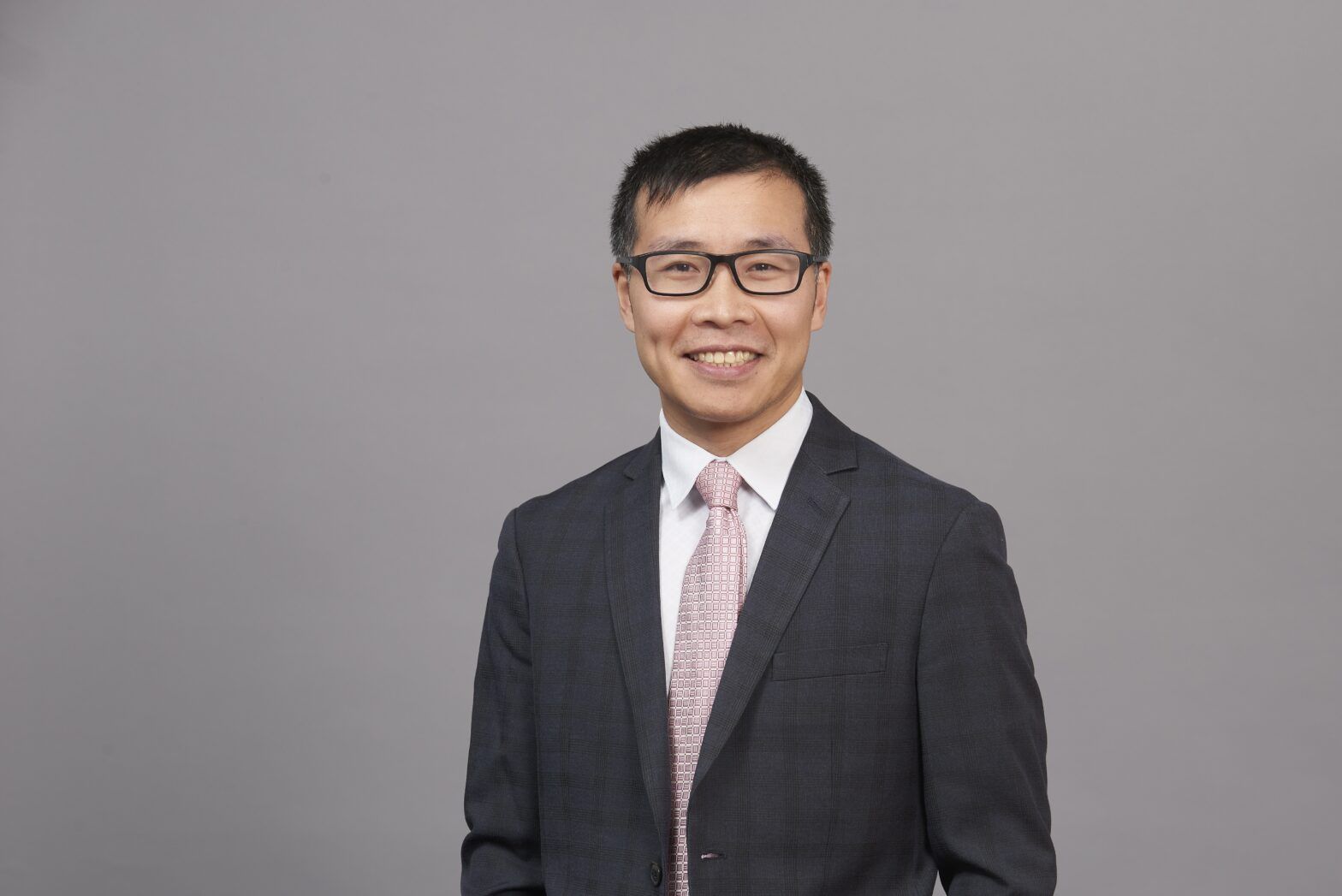
Invesco’s co-lead of global investment grade credit says artificial intelligence (AI) financing faces growing risks and has concerns over “existential” borrowing in the sector.
Invesco’s co-lead of global investment grade credit says artificial intelligence (AI) financing faces growing risks and has concerns over “existential” borrowing in the sector.

The fund is now available to retail investors in the territory through HSBC.

JP Morgan Asset Management in its long-term projections says it expects alternatives to enhance returns in a balanced portfolio of stocks and bonds.
JP Morgan Asset Management in its long-term projections says it expects alternatives to enhance returns in a balanced portfolio of stocks and bonds.

Diversification requires looking beyond asset class labels to understand underlying risks, according to BlackRock.

Sponsored by Loomis Sayles & Natixis
The Growth Equity Strategies Team at Loomis Sayles, an affiliate of Natixis Investment Managers, demonstrates that patience, discipline and conviction result in consistent, peer-leading risk-adjusted compounding over cycles.
Invesco’s co-lead of global investment grade credit says artificial intelligence (AI) financing faces growing risks and has concerns over “existential” borrowing in the sector.
The fund is now available to retail investors in the territory through HSBC.
Invesco’s co-lead of global investment grade credit says artificial intelligence (AI) financing faces growing risks and has concerns over “existential” borrowing in the sector.
Invesco’s co-lead of global investment grade credit says artificial intelligence (AI) financing faces growing risks and has concerns over “existential” borrowing in the sector.

The portfolio manager used the midterm dip to increase exposure to Amazon and Alphabet.

This week, FSA compares the Robeco Smart Energy fund and the Pictet Clean Energy Transition fund.
This week, FSA compares the Robeco Smart Energy fund and the Pictet Clean Energy Transition fund.

BlackRock, Vanguard, and Fidelity form top three managers.
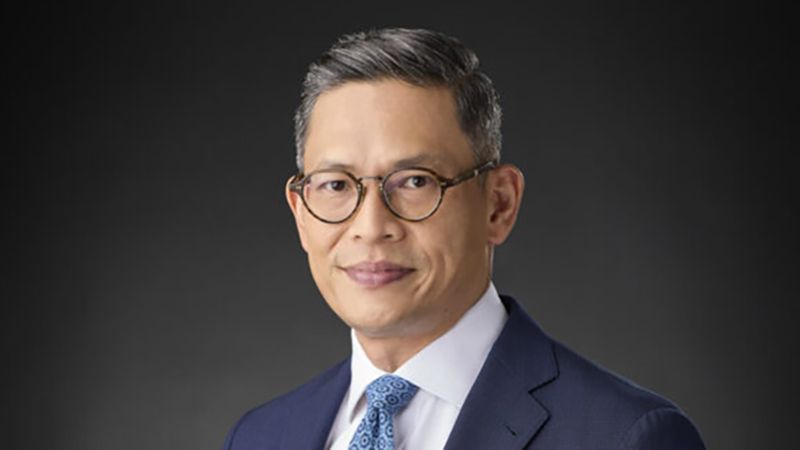
Markets have overly punished China equities with long-term innovation drivers, according to Aberdeen Investment’s Nicholas Yeo.
Markets have overly punished China equities with long-term innovation drivers, according to Aberdeen Investment’s Nicholas Yeo.

The Hong Kong finance veteran has moved to M&G.
The portfolio manager used the midterm dip to increase exposure to Amazon and Alphabet.

The stockmarket fall shortly after the US midterms provided a stellar opportunity to invest more money in ‘hyperscaler’ stocks, according to J. Stern & Co’s Giles Tulloch, who increased his fund’s weighting to both Amazon and Alphabet during the sell-off.
However, Tulloch, who is a portfolio manager on J. Stern’s World Stars Global Equity and US Stars Equity funds, warned not every AI-related company will emerge a winner, arguing there is more bifurcation to come for supply chain companies across memory and storage sectors.
Two days after the US midterms took place on 3 November, the PHLX Semiconductor index fell by 12.3%, erasing roughly $1.5trn in chipmaker market value over the course of one day, according to data from Yahoo Finance. It marked the index’s steepest decline since 16 March 2020, when the world began locking down during the throes of Covid.
“We saw quite a few high-profile funds being liquidated, too, and it really caused a rethink among investors in terms of artificial intelligence,” Tulloch explained.
“The big news story was Texas, and how it turned from red to blue. Texas is very important for artificial intelligence, and it’s estimated that about 25% of all the new data centre construction in the States is going to be in Texas.”
Tulloch pointed out that Texas Governor-elect Gina Hinojosa has pledged to pause new data centre approvals after she takes office in January next year, until community and infrastructure protection is put in place by the Texas Legislature.
“I think everyone freaked out a little bit and thought, ‘oh no, this means AI is finished. We’re not going to build any more data centres, sell those stocks’.
“So we were actually active in the market. We were buying some AI-related companies on the Thursday and Friday, adjusting our exposure.
“We saw a great opportunity to invest more into the hyperscalers, into Amazon and Alphabet.”
Tulloch said there were several reasons behind this decision. First, the team believes the “huge demand for AI” will remain in place, and there has been “a revolution in terms of how people use AI”.
According to data from PNC Research and YipitData, obtained by J. Stern, the share of US households paying for AI subscriptions has increased steadily over the last three years to 2.2%. Meanwhile the average monthly AI spend per subscribing household has ticked up to $31 per month.
The sharpest uptick has been in the number of active paid consumer AI subscriptions across the country which, over three years, has increased from virtually zero to 72,000.
“Initially, it was about question-and-answer. It was a data retrieval tool. Then we discovered that it can do some calculations for us, that it has some reasoning ability,” Tulloch explained. “Now, you can actually set it to complete tasks. It can book you cinema tickets.
“So now, we are at a point where we’re more limited by our own imagination in terms of what we think AI can do for us, than we are by what AI itself can actually do.”
The portfolio manager explained that, as is often the case with new technological trends, there are early adopters during the first rising tide of a new product or service, then these begin to “fade away”.
“Instead, with AI, what we’re seeing is that it just steadily builds and builds and builds. More and more people are finding value [in its use]. More households are paying for AI, but also in terms of enterprise. Enterprises are now finding many more use cases for artificial intelligence. So we’re quite happy in terms of the demand.”
According to data obtained by J. Stern from The News in Data, ChatGPT reached one billion users in just four years, while Facebook took eight and-a-half years to achieve the same number.
“This is why, when we’re thinking about the supply side of things, this is where we see opportunities,” Tulloch said.
“With all of these types of technology transitions, you’re going to see speculation. You’re going to see new entrants into the market. We think of those as being the likes of neocloud companies, for example, which are obviously quite levered.
“But actually, the companies we invest in are quality, long-term companies – the hyperscalers.”
For example, the J. Stern & Co World Stars Global Equity fund has a 5.1% allocation to Amazon, according to its 31 October factsheet, although the team has since added to this position.
“It’s not their first rodeo building a data centre. They’re well versed in acquiring the land, the construction, getting the power there. But they also have the relationships with their customers. They’ve got a whole stack. They have other services built around the theme, rather than just purely providing the shell,” Tulloch said.
“So we actually think that, in an environment where data centre construction could be crimped or hindered, what has happened [in the US midterms] will smooth out the trajectory.
“Instead of having a huge number of data centres getting built in the next year or two years, and capacity or demand being pulled forward, this blue wave will cause a smoothing out effect, and actually, it will last for longer.”
Elsewhere, Tulloch and the team have reduced their exposure to supply-chain companies, because they believe they have already received an “artificial benefit from this pull-forward in demand”.
“They’ve been able to increase prices quite significantly. You’re seeing that with the memory and storage companies, in particular. They’ve been able to inflate prices to quite high levels.
“And now, there will be an inability to accommodate this demand, and we could actually see those companies pull back. Because in fact, the strength lies with those existing agreements in place.”
Tulloch referred to data from OpenRouter which found that, from January to October this year, monthly usage of AI tokens surged on the platform by more than 25 times to 789.9 trillion.
“You can see that usage has grown significantly, but what is really interesting is that it’s not just going to the Anthropics, or to the OpenAIs. It’s going to lots of lower-cost Chinese models, for example,” the portfolio manager said.
“What we will see is a bifurcation in the market, where you’ll have the frontier models doing very advanced coding, but then you’ll have also the OpenAI models doing more basic tasks.
“But demand will increase significantly and, again, it will benefit those companies which are providing the capacity, not the intelligence.”
This article first appeared in our sister publication, Portfolio Advisor.
We present the full shortlist of funds for Singapore.
We present the full shortlist of funds for Hong Kong.
Mark Coppell has joined Lord Abbett’s Singapore office as a managing director for its Apac institutional business.