Man Group sees no bubble in Asian memory stocks
There are fundamental reasons for the parabolic rally, according to Man Group’s Nick Wilcox.


There are fundamental reasons for the parabolic rally, according to Man Group’s Nick Wilcox.
There are fundamental reasons for the parabolic rally, according to Man Group’s Nick Wilcox.
Wealth management is similar to being a family doctor, says Morgan Stanley PWM Asia’s Christina Au-Yeung.

The partnership includes prominent brand visibility, alongside access to premium hospitality.
The partnership includes prominent brand visibility, alongside access to premium hospitality.

There are no changes to the leadership of the underlying investment teams.
Sponsored by Loomis Sayles & Natixis
The Growth Equity Strategies Team at Loomis Sayles, an affiliate of Natixis Investment Managers, demonstrates that patience, discipline and conviction result in consistent, peer-leading risk-adjusted compounding over cycles.

A more granular, thematic approach is increasingly necessary for multi-asset investing, says UBS AM’s asset allocators.
The partnership includes prominent brand visibility, alongside access to premium hospitality.
There are fundamental reasons for the parabolic rally, according to Man Group’s Nick Wilcox.
There are fundamental reasons for the parabolic rally, according to Man Group’s Nick Wilcox.
Wealth management is similar to being a family doctor, says Morgan Stanley PWM Asia’s Christina Au-Yeung.

This week FSA provides a quick comparison of two US equity funds: Brandes US Value and JP Morgan US Value.
This week FSA provides a quick comparison of two US equity funds: Brandes US Value and JP Morgan US Value.

This week FSA compares the First Sentier Global Listed Infrastructure fund and M&G Global Listed Infrastructure fund.
There are fundamental reasons for the parabolic rally, according to Man Group’s Nick Wilcox.
There are fundamental reasons for the parabolic rally, according to Man Group’s Nick Wilcox.

Listed subsidiary takeouts have been a boom for active value managers in Japan betting on the unwinding of so-called ‘parent-child’ listings.
Active ETFs leveraging on AI provide opportunities for beta-plus returns, says Karen Tan, executive director, fund solutions lead, Asia at Pictet Wealth Management.
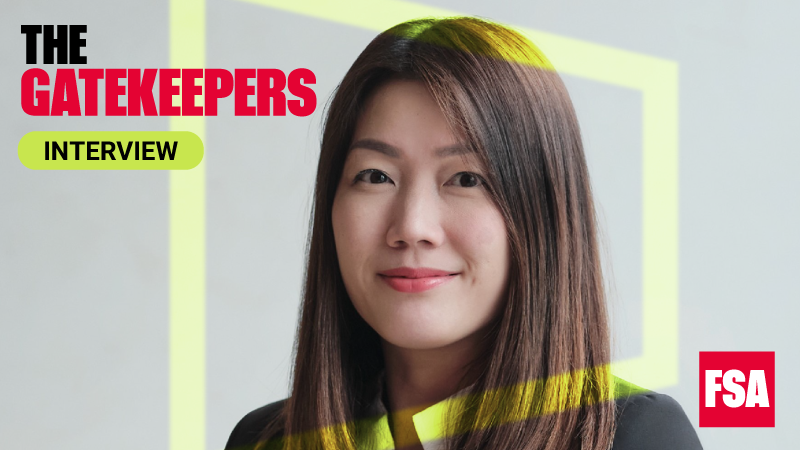

In the second of our series of exclusive gatekeeper interviews, FSA speaks with Karen Tan, executive director, fund solutions lead, Asia at Pictet Wealth Management.
A graduate of Nanyang Technological University, Karen has more than 20 years of experience in the private banking industry. She started her career at Merrill Lynch and has also worked at HSBC Private Bank and Bank of Singapore. Karen joined Pictet Wealth Management in 2020 as a fund specialist.
What attracted you to the wealth management industry?
It was a natural progression from my banking background—but more importantly, it felt like a calling. Wealth management appeals to me as it sits at the intersection of markets, strategy, and people. The opportunity to combine analytical skills with a client-focused approach is rewarding.
What is the highlight of your career so far?
Stepping into a leadership role. I started as an individual producer, so leading a team required a fundamental shift in mindset—from focusing on my own performance to driving collective outcomes. It taught me to think more strategically and make decisions with a full business impact in mind.
What lessons have you learned from your work?
Preparation is everything. I’ve found that when I take the time to really prepare, whether it’s for a client meeting, a market event, or even just my daily tasks, I feel much more confident and able to handle whatever comes my way. That mindset was shaped early on during my time as a Girl Guide, where resilience and adaptability were ingrained from the start. Those lessons have stayed with me.
Markets are unpredictable, but preparation and discipline allow you to navigate uncertainty with confidence and build long-term resilience, staying with a disciplined asset allocation approach to diversify the portfolio and mitigate risks.
What strategies are you recommending to your clients?
A priority is hedging solutions. In times of market volatility, such as now, we like solutions that can hedge downside risk. With the intense scrutiny surrounding private credit markets of late, investors are more cautious about illiquidity risks. Hence, in the current market climate, liquid alternative solutions offer hedging capabilities with daily liquidity.
Precious metals, in particular gold, have been gaining good traction. The pullback in March on dollar strength has provided a good entry point for our clients who have been waiting to add to the yellow metal.
We also like tangible assets, especially HALO (heavy asset, low obsolescence) assets. Given the pledged fiscal spending, electrification, and need for power, there is a growing demand for better infrastructure. Companies in this space tend to operate in oligopolistic or monopolistic market structures that give them pricing power and provide inflation-linked income streams, that is, greater resilience during inflationary periods.
Energy security is an important theme. With increased geopolitical tensions, energy security has been in focus as nations face supply chain constraints, and rising oil prices have exacerbated inflationary pressures. A surge in electricity demand, combined with an aging grid, is driving the need for greater investment in clean, affordable energy and modernised networks, as well as an increased focus on efficiency, particularly in power-intensive sectors, such as data centres.
Short-duration bonds are attractive. Credit spreads have widened indiscriminately as concerns about rising energy prices have led to anxieties of higher-for-longer inflation and, in turn, high-for-longer rates. The spike in yields has made the front end of the yield curve more attractive.
Finally, we recommend seeking alpha with AI. We have initiated switches from passive index tracking ETFs to active, enhanced ETFs, leveraging on machine learning and AI with the aim of outperforming the index. Compared with passive ETFs, which tend to underperform the index due to their total expense ratios, the enhanced index approach offers the opportunity for beta plus returns.
What types of funds have you onboarded recently?
We’ve expanded our platform to reflect evolving client needs. At the start of the year, we added a Singapore-dollar corporate bond ETF in response to requests for non-US-dollar solutions. In Asia, clients are receptive to holding the Singapore dollar as a currency diversifier, hence the need for Singapore dollar products.
Also, in the first quarter of this year, we added an active US ETF that is the US equity sleeve of a global strategy we launched in 2024, an impact social bond fund, a global multi-sector credit fund to complement the existing shelf, a global high yield solution using synthetic replication via credit default swaps, and a Swiss real estate fund
What keeps you awake at night?
Geopolitics. It’s not just the market implications but also the longer-term structural and societal impacts they can have.
There are fundamental reasons for the parabolic rally, according to Man Group’s Nick Wilcox.
Wealth management is similar to being a family doctor, says Morgan Stanley PWM Asia’s Christina Au-Yeung.

It combines its wealth management platform with Quantum Trust’s licensed trustee capabilities.