Asian investors rotate into equities as bond flows turn negative: Calastone report
Multi-asset funds remained the strongest-performing asset class during the first half of this year.


Multi-asset funds remained the strongest-performing asset class during the first half of this year.
Multi-asset funds remained the strongest-performing asset class during the first half of this year.

The world’s largest asset manager saw $192bn of net inflows in the second quarter of 2026, driven by ETFs, private markets, and systematic equity strategies.
The world’s largest asset manager saw $192bn of net inflows in the second quarter of 2026, driven by ETFs, private markets, and systematic equity strategies.
The world’s largest asset manager saw $192bn of net inflows in the second quarter of 2026, driven by ETFs, private markets, and systematic equity strategies.

Making consistent distributions to paid-in capital is top strategic priority, according to MSCI’s 2026 General Partner Survey.
Sponsored by Loomis Sayles & Natixis
The Growth Equity Strategies Team at Loomis Sayles, an affiliate of Natixis Investment Managers, demonstrates that patience, discipline and conviction result in consistent, peer-leading risk-adjusted compounding over cycles.
Multi-asset funds remained the strongest-performing asset class during the first half of this year.
The world’s largest asset manager saw $192bn of net inflows in the second quarter of 2026, driven by ETFs, private markets, and systematic equity strategies.

The region will enjoy organic growth, fuelled by an expanding middle class and pension reforms.
The region will enjoy organic growth, fuelled by an expanding middle class and pension reforms.

Artificial Intelligence is helping drive an unprecedented breakout in US GDP growth and “extraordinary” earnings growth, according to BlackRock’s global chief investment strategist.
Multi-asset funds remained the strongest-performing asset class during the first half of this year.
Multi-asset funds remained the strongest-performing asset class during the first half of this year.

This week, FSA provides a quick comparison of two Indian equity funds: Jupiter India Select and FSSA Indian Subcontinent.

The Baillie Gifford Enhanced Yield fund invests in short-dated government and corporate bonds.
The Baillie Gifford Enhanced Yield fund invests in short-dated government and corporate bonds.

Funds from Wellington Management, Allianz GI, Barings and iShares are highlighted by Morningstar.
Wealth management is similar to being a family doctor, says Morgan Stanley PWM Asia’s Christina Au-Yeung.
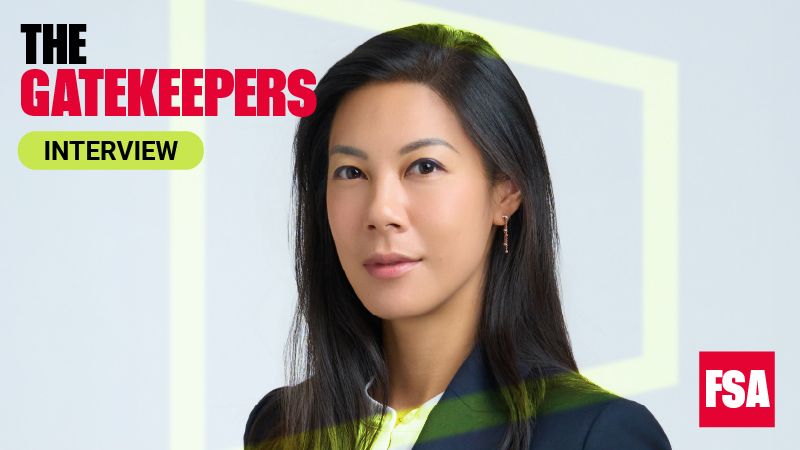

In the fourth of our series of exclusive gatekeeper interviews, FSA speaks with Christina Au-Yeung, head of investment management services, Morgan Stanley Private Wealth Management Asia.
Christina is head of investment management services (IMS) for Morgan Stanley Private Wealth Management Asia (PWM Asia), based in Hong Kong. IMS is responsible for the origination, diligence, marketing and distribution of managed solutions and advisory portfolio services. Christina read Anthropology and Law at the London School of Economics and Political Science, United Kingdom.
What drew you to wealth management in the first place?
Wealth management offers the unique opportunity to work at the intersection of markets, money managers and clients. I was attracted to the pursuit of helping clients to navigate markets and products in a way that is both intellectually rigorous and deeply personal.
Over time, I have come to see wealth management as something akin to being a financial doctor. Particularly among ultra-high net worth entrepreneurs and asset owners, whose personal and business ambitions are often highly complex, the role extends beyond presenting investment ideas or reacting to market moves. It is about diagnosing needs, advising thoughtfully, and constructing solutions with a holistic understanding of each client’s circumstances.
What continues to make the industry so compelling is the degree of trust that underpins the advisory relationship. Clients are often making significant decisions in uncertain environments, and our responsibility is to help them traverse that complexity with clarity and confidence, employing judgment, discipline, and the ability to build enduring trust over time.
Looking back, what are some of the biggest lessons your work has taught you?
One of the biggest lessons has been that risk management is paramount. Performance matters, of course, but not in isolation from risk. Strong outcomes are only meaningful if portfolios are built in a way that allows clients to stay invested through periods of volatility, policy uncertainty, and shifting market leadership. In the end, long-term compounding depends as much on managing downside risks and liquidity considerations as it does on identifying attractive opportunities.
Another important lesson is the need to match goals with exposure, even while pursuing compelling opportunities. Portfolios that are simply assembled as collections of products tend to be less effective than those designed with a clear purpose. The exposure a client takes on should always be aligned with the objective for that capital, without losing the flexibility to be opportunistic where appropriate.
The third lesson is the importance of communication. In periods of market stress or heightened uncertainty, the quality of communication becomes just as important as the quality of the investment view itself. Clients do not benefit from ambiguity; they value a clear articulation of the opportunity, the risks, the rationale for implementation, and the role a strategy is expected to play within the broader portfolio. I have learnt that conviction must be accompanied by transparency and precision, because that is what enables clients to act decisively and remain anchored during volatile periods.
In today’s environment, what kinds of strategies are you recommending to clients?
Morgan Stanley’s current outlook remains constructive on risk assets, supported by earnings resilience and the AI capex cycle, while avoiding complacency given the backdrop of energy price volatility and geopolitical risk. In practical terms, that translates into an overweight position in equities, an underweight in corporate credit, and equal-weight exposure to commodities and cash. The aim is to maintain participation in growth while remaining selective about where risks are adequately compensated.
Within equities, we are emphasising selectivity and active positioning. Developed markets are preferred to emerging markets, with the US remaining a top pick on the back of an earnings-led thesis. We also continue to see structural appeal in Japan, where themes such as AI, power infrastructure, robotics, and governance reform remain supportive. In emerging markets, the approach is more targeted and theme-driven rather than broadly directional.
From an implementation perspective, our fund and mandate recommendations are therefore focused on thematic equity portfolios, balanced strategies, and select specialist funds as a way of expressing these macro views in a controlled and diversified manner.
In fixed income, the outlook calls for more nuance. We currently prefer government bonds and see select opportunities in securitized assets, although valuations remain an important consideration. More broadly, we encourage clients to think carefully about which parts of the capital structure are best placed to fulfil the intended role within their portfolios.
Overall, our advice is to remain invested, but to do so with discipline: favouring areas supported by stronger earnings and structural tailwinds, while using active, thematic, and multi-asset strategies where appropriate.
What types of funds have you been adding to the platform recently?
An area of focus has been high-conviction equity strategies, particularly those offering differentiated exposure to structural growth themes. That includes an emphasis on technology, healthcare and financials, alongside Asia-oriented opportunities that reflect regional transformation, especially in markets such as Japan, Taiwan, and Korea.
We have continued to expand our offering in systematic and quantitative strategies, as non-fundamental factors, technical flows, and bouts of elevated volatility can have a meaningful influence on market outcomes. These strategies can play an important role in diversifying portfolios, while capturing return drivers that may not always be available through traditional fundamental analysis alone.
We have also added income-oriented balanced funds that can move flexibly between equities and fixed income. Mixed-asset strategies can offer a useful combination of equity participation, fixed income stability, income generation, and downside protection.
Finally, we have continued to broaden our alternatives platform, with particular emphasis on hedge funds, real assets, and select private market opportunities. Recent additions have included equity long/short, event-driven, and Asia-focused strategies, as well as infrastructure and commodities. We are also seeing growing interest in venture capital opportunities for exposure to innovation-led businesses against a backdrop of capital market resurgence.
As you look at markets today, what is one risk you think deserves more attention?
One risk that deserves more attention is unintended concentration, coupled with a degree of market complacency. Concentration often builds gradually rather than deliberately. After periods of strong performance, portfolios can become increasingly reliant on a narrow set of themes, sectors, geographies, or underlying drivers, particularly when a small number of dominant narratives begin to shape market behaviour.
Complacency can be just as problematic. When markets have been resilient, there is often a tendency to underappreciate how quickly conditions can change, whether because of macroeconomic surprises, policy shifts, geopolitical developments, or a reassessment of valuations. The challenge is not to react to every source of noise, but to ensure that diversification is substantive rather than cosmetic, and that portfolios are built to withstand more than one market regime.
Making consistent distributions to paid-in capital is top strategic priority, according to MSCI’s 2026 General Partner Survey.
The Baillie Gifford Enhanced Yield fund invests in short-dated government and corporate bonds.
Artificial Intelligence is helping drive an unprecedented breakout in US GDP growth and “extraordinary” earnings growth, according to BlackRock’s global chief investment strategist.