Granite Asia partners with Google AI Futures Fund for Asia startups
The two companies will co-invest up to $2m per startup and give them access to Google’s AI models.


The two companies will co-invest up to $2m per startup and give them access to Google’s AI models.
The two companies will co-invest up to $2m per startup and give them access to Google’s AI models.
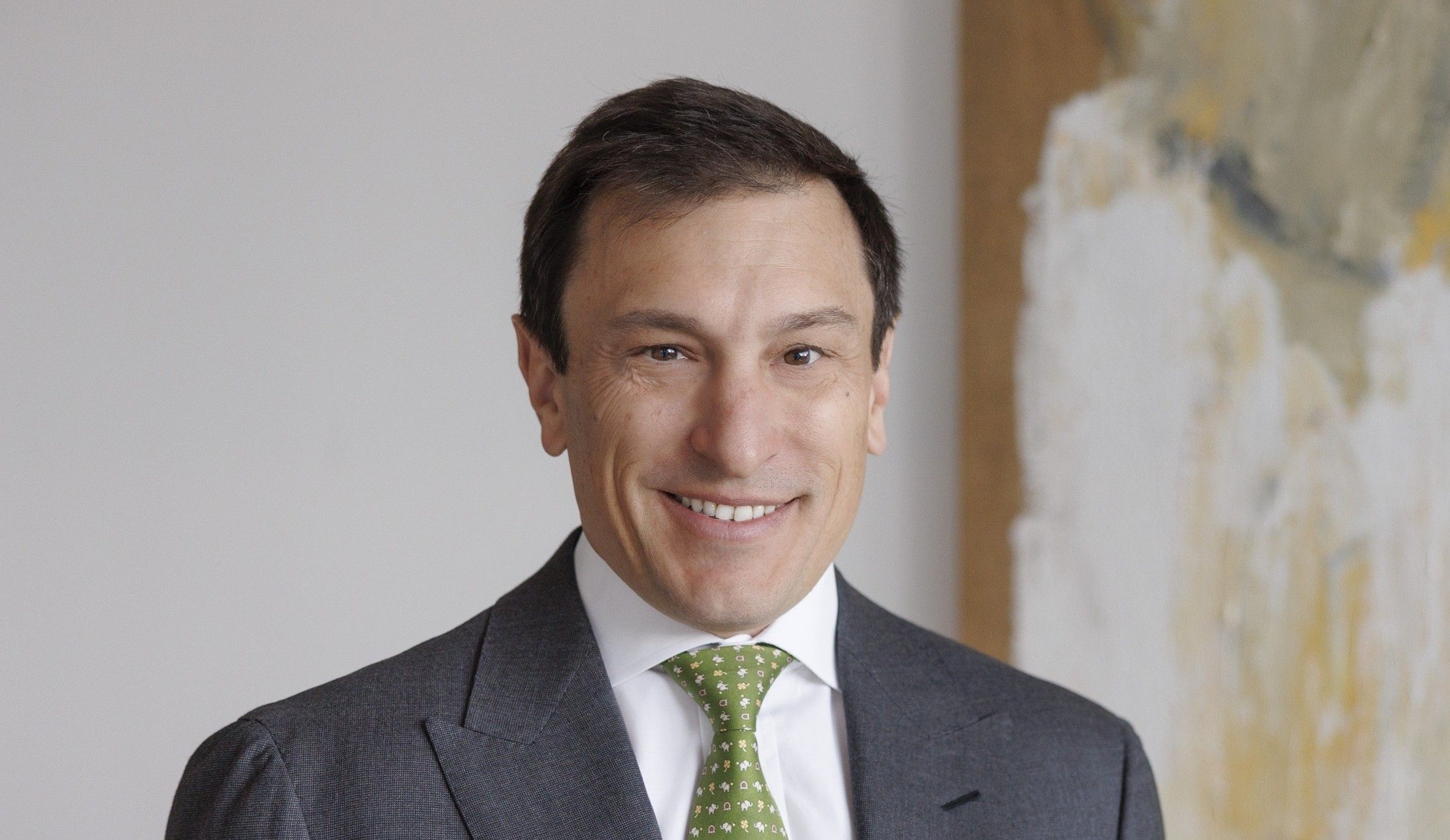
Pictet’s multi-strategy hedge fund currently allocates to about 20 different internally managed market neutral strategies, Doc Horn, equity partner and head of total return at Pictet Asset Management, tells FSA.
The two companies will co-invest up to $2m per startup and give them access to Google’s AI models.
The two companies will co-invest up to $2m per startup and give them access to Google’s AI models.
Pictet’s multi-strategy hedge fund currently allocates to about 20 different internally managed market neutral strategies, Doc Horn, equity partner and head of total return at Pictet Asset Management, tells FSA.
Sponsored by Loomis Sayles & Natixis
The Growth Equity Strategies Team at Loomis Sayles, an affiliate of Natixis Investment Managers, demonstrates that patience, discipline and conviction result in consistent, peer-leading risk-adjusted compounding over cycles.
The two companies will co-invest up to $2m per startup and give them access to Google’s AI models.
Pictet’s multi-strategy hedge fund currently allocates to about 20 different internally managed market neutral strategies, Doc Horn, equity partner and head of total return at Pictet Asset Management, tells FSA.
Pictet’s multi-strategy hedge fund currently allocates to about 20 different internally managed market neutral strategies, Doc Horn, equity partner and head of total return at Pictet Asset Management, tells FSA.
Pictet’s multi-strategy hedge fund currently allocates to about 20 different internally managed market neutral strategies, Doc Horn, equity partner and head of total return at Pictet Asset Management, tells FSA.

The US has time to get its national debt levels back on a sustainable trajectory, according to Pimco’s investment chief Dan Ivascyn.

Advisers in Asia are committing to alternatives at a time of markedly lower confidence, the survey found.
Advisers in Asia are committing to alternatives at a time of markedly lower confidence, the survey found.

Passing on wealth is easier than preparing heirs to manage it, a Sun Life Asia study finds.
Advisers in Asia are committing to alternatives at a time of markedly lower confidence, the survey found.
Advisers in Asia are committing to alternatives at a time of markedly lower confidence, the survey found.

The appointments bring the team to 25 professionals and build on four appointments made earlier in 2026.
Pictet’s multi-strategy hedge fund currently allocates to about 20 different internally managed market neutral strategies, Doc Horn, equity partner and head of total return at Pictet Asset Management, tells FSA.

Investors have often turned to hedge funds to manage volatility, improve diversification and find alternative sources of risk-adjusted returns. Their urgency has become even greater amid current geopolitical turmoil, inflationary pressures and the prospect of higher interest rates.
Furthermore, after two decades of negative stock–bond correlation, the relationship has repeatedly broken down during periods of market stress, limiting the effectiveness of bonds as diversifiers and weakening the resilience of traditional balanced portfolios
“Our hedge fund strategies are intentionally diverse, with low correlation between them. Some are deeply fundamental with low turnover, while others trade more actively,” Doc Horn, equity partner and head of total return at Pictet Asset Management, told FSA in a recent interview during his visit to Hong Kong from London.
Pictet has over 20 years’ experience managing hedge funds. The franchise covers six pillars of expertise, with AUM of $10.5bn (as of end August 2026). This includes multi-strategy, both fundamental equity market neutral and directional equity long/short, systematics equity, event-driven and fixed income strategies.
“This diversity provides a robust toolkit to navigate different market environments,” said Horn (pictured), who before joining Pictet, spent 11 years at UBS O’Connor, where he was a managing director and the head of global fundamental market neutral long/short equity.
Pictet’s total return funds, are structured as Luxembourg-domiciled Ucits and are available to institutional investors and through intermediaries such as private banks in Asia.
Currently, Pictet’s multi-strategy fund, which is the foundation of the manager’s hedge fund business, allocates to approximately 20 different strategies, grouped into four main categories: fundamental long/short equities, event-driven, systematic equity, and fixed income.
“It enables investment teams to build a track record within Pictet AM, positioning us to launch standalone funds when investor demand arises,” said Horn.
“The allocation to each strategy is regularly reviewed and adjusted by our investment committee, which oversees risk management and portfolio construction,” he said. Leverage is used within defined limits at both the individual strategy level and the overall fund level. “We maintain consistency in risk management, and any significant deviation from historical leverage levels is closely monitored,” Horn added.
Pictet’s flagship global equity long/short strategy, with a 10-year track record, invests in large-cap companies across developed and emerging markets. Key sectors include technology and industrials, with consistent exposure to semiconductors, memory, AI supply chain, and aerospace. The fund has recently reduced exposure to aerospace due to rising jet fuel prices and geopolitical risks.
“Unlike pure market-neutral funds, it has the flexibility to adjust its market exposure, typically maintaining an average beta of 0.2,” Horn said.
“This allows the team to take advantage of market opportunities while maintaining relatively low overall market risk. “This strategy has gained significant traction due to its low correlation with broader markets, strong risk-adjusted returns, and resilience during market drawdowns,” he said.
Pictet also offers a higher-octane version of this fund, which applies 2x leverage to the strategy, creating a more directional profile with higher volatility and return potential, while maintaining strong risk‑adjusted characteristics and drawdown protection.
On the equity side, Pictet also manages a highly successful China equity long/short fund with a 20-year track record, and a European equity long/short fund. Within Event-Driven, they manage an Asia special situations fund and a distressed debt and special situations fund focused on Europe and the US. On the quantitative side, they have also launched an AI-driven global equity long /short fund.
Finally, on the Fixed Income side, the company manages a fund that implements a wide range of relative value trades in emerging and niche market sovereign bonds, rates and FX such as Zimbabwe, Egypt, Uzbekistan and Uganda, seeking opportunities where others may not be looking. “While we have experience with distressed sovereign debt, this fixed income strategy is not a distressed debt product,” Horn said.
Basically, the managers can launch a dedicated fund while maintaining the strategy within the multi-strategy platform. This approach enables Pictet to offer a broader range of products to clients and helps attract top investment talent by providing teams with the opportunity to manage standalone funds in the future.
“We believe that having teams integrated within Pictet enhances collaboration, resource sharing, and overall performance,” said Horn.
Their fee structure is typically between 1% and 1.2% management fee, plus a 20% performance fee, “which is at the lower end of the industry range”.
“We are transparent with our investors about fees and returns, ensuring they understand the portion of gross returns they receive after fees. In contrast, some competitors use pass-through fee structures, which can significantly reduce net returns due to higher operating costs,” Horn said.
“Liquidity is also a key consideration: our multi-strategy fund offers weekly liquidity, while our other hedge funds provide daily liquidity, supported by highly liquid underlying assets,” he noted.
When discussing their strategies with clients, common questions include Pictet’s approach to talent recruitment, new strategies under consideration, differentiation from competitors, risk management, and how our funds fit within broader portfolios.
The wealth channel is now a major driver of flows into alternatives. This is forcing change in product design, liquidity structures, communication and portfolio construction. “Alternatives are increasingly strategic building blocks rather than opportunistic satellites,” Horn concluded.

This partnership marks Endowus’ first offering of a standalone private credit strategy focused on European direct lending.

Here is a digest of significant wealth and asset management appointments, promotions and departures during the previous month.

Eligible investors in Singapore now have access to regulated tokenized liquidity that is issued and administered on-chain.