PAG: Asian real estate offers attractive credit opportunities
Real estate-backed private debt remains attractive in Asia, says Chris Gradel, CEO and co-founder of PAG, one of the region’s largest alternative asset managers.


Real estate-backed private debt remains attractive in Asia, says Chris Gradel, CEO and co-founder of PAG, one of the region’s largest alternative asset managers.
Real estate-backed private debt remains attractive in Asia, says Chris Gradel, CEO and co-founder of PAG, one of the region’s largest alternative asset managers.
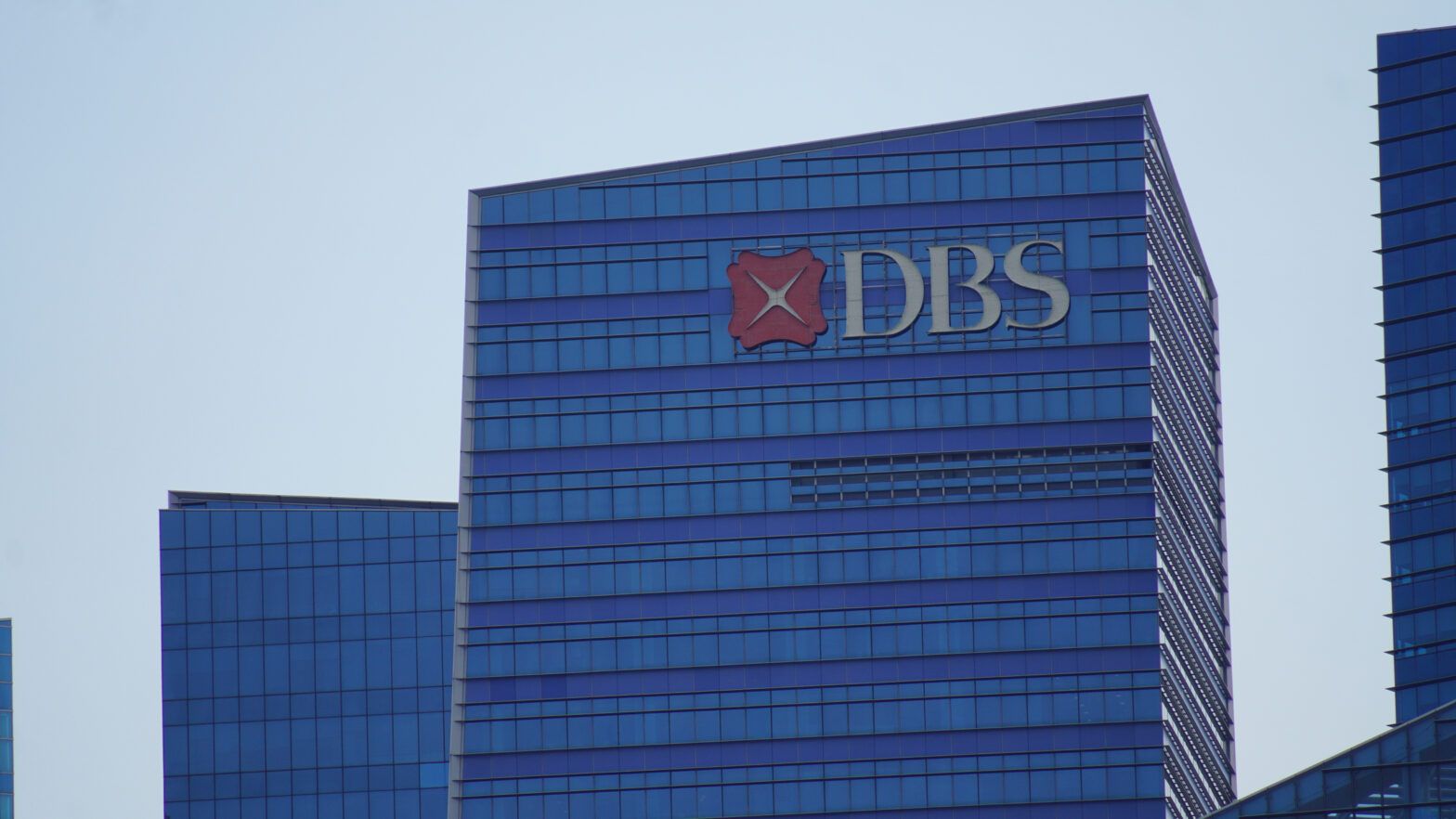
The Singaporean bank said it will offer tokenized gold to retail investors backed by physical gold held in a Singapore vault.
Real estate-backed private debt remains attractive in Asia, says Chris Gradel, CEO and co-founder of PAG, one of the region’s largest alternative asset managers.
Real estate-backed private debt remains attractive in Asia, says Chris Gradel, CEO and co-founder of PAG, one of the region’s largest alternative asset managers.
The Singaporean bank said it will offer tokenized gold to retail investors backed by physical gold held in a Singapore vault.
Sponsored by Loomis Sayles & Natixis
The Growth Equity Strategies Team at Loomis Sayles, an affiliate of Natixis Investment Managers, demonstrates that patience, discipline and conviction result in consistent, peer-leading risk-adjusted compounding over cycles.
Real estate-backed private debt remains attractive in Asia, says Chris Gradel, CEO and co-founder of PAG, one of the region’s largest alternative asset managers.
The Singaporean bank said it will offer tokenized gold to retail investors backed by physical gold held in a Singapore vault.
Real estate-backed private debt remains attractive in Asia, says Chris Gradel, CEO and co-founder of PAG, one of the region’s largest alternative asset managers.
Real estate-backed private debt remains attractive in Asia, says Chris Gradel, CEO and co-founder of PAG, one of the region’s largest alternative asset managers.

The global collectibles market is continuing to expand and evolve, particularly in Asia.

This week FSA compares the BlackRock Global Funds – Emerging Markets fund and the MFS Meridian Funds – Emerging Markets Equity fund.
This week FSA compares the BlackRock Global Funds – Emerging Markets fund and the MFS Meridian Funds – Emerging Markets Equity fund.

FSA looks at the top performing funds 100 days after the outbreak of the Iran war on February 28th.
Real estate-backed private debt remains attractive in Asia, says Chris Gradel, CEO and co-founder of PAG, one of the region’s largest alternative asset managers.
Real estate-backed private debt remains attractive in Asia, says Chris Gradel, CEO and co-founder of PAG, one of the region’s largest alternative asset managers.
The Singaporean bank said it will offer tokenized gold to retail investors backed by physical gold held in a Singapore vault.
The global collectibles market is continuing to expand and evolve, particularly in Asia.

Wealthy collectors should combine their passion for collecting with purposeful planning to protect their family wealth in the “Great Stuff Transfer”, according to HSBC Private Bank.
The bank’s latest report, Collectibles: Having purpose and passion, explores how the global collectibles market is continuing to expand and evolve, particularly in Asia. Amid rising wealth, high-net-worth and ultra-high-net-worth individuals are increasingly building large private collections around the world, including in art, vintage cars, watches, ceramics and memorabilia.
While collecting often begins organically, practicalities become increasingly important as collections grow in scale and significance, including the need for logistics, storage, installation and maintenance.
Ida Liu, CEO, HSBC Private Bank, said: “Private collections are expressions of identity, legacy and intention. As they grow in significance, so too does the responsibility of stewardship. With thoughtful planning, collectors can preserve not only what they have built, but the meaning behind it for generations to come.”
Few sectors of the collectibles market are more glamorous and fast-paced than art. In 2025, global art auction turnover rose 12% to $11.1bn, with 867,000 works sold. The US
retained its lead at the top of the rankings, with a 42.3% market share, followed by mainland China on 15.8% and the UK 13.4%.
Last November, Sotheby’s New York set a new record for a modern painting when it sold Gustav Klimt’s “Portrait of Elisabeth Lederer” to an unknown bidder for $236.4m.
Among cars, brand is usually the starting point. In 2025, five of the most expensive cars sold at auction were Ferraris, although the highest overall was a 1954 Mercedes-Benz W 196 R. This vehicle, one of only four in existence, fetched $53m, the most valuable Grand Prix racing car ever sold.
Swiss watch exports, the benchmark for global mechanical watchmaking, reached
$32.55 billion in 2025, according to the Federation of the Swiss Watch Industry.
Memorabilia is a burgeoning market. In January 2025, a life-sized Labubu doll sold for just over $150,000 at a Beijing auction. The dolls, created by Hong Kong artist Kasing Lung, have become increasingly popular thanks to celebrity endorsements from entertainment stars such as Lisa, a singer from the K-pop group, Blackpink.
But it is Pokémon, which turns 30 in 2026, that is setting the big records. In February 2026, a Pikachu Illustrator card, issued as part of a contest in Japan back in 1998, sold for a record $16.5 million.
Nostalgia is also driving the memorabilia markets, which led to a comic book bought for 10 cents in 1938 being sold in January 2026 for $15m.
However, building, maintaining and ultimately passing on a collection is more complicated than it first appears, so HSBC Private Bank stresses the importance of several imperatives.
First, cataloguing and appraising passion assets on a regular basis help to create informational building blocks to aid a smoother transfer to the next generation. Collectors should also ensure that their heirs know where their assets are located, and how to gain access to them when needed. HSBC PC calls this “informational audits”.
Second, communication is essential. maintaining an open dialogue with children should clarify a collector’s purpose for their collection. This means that at inheritance heirs should have a clear understanding of whether the collector wishes for their assets to be kept intact, divided, retained, donated, placed on public display, or sold.
Finally, collectors should consider incorporating their passion assets into their wider estate planning to avoid the risk of disputes between heirs at inheritance. Formal plans can significantly help reduce legal, logistical, tax and emotional burdens for beneficiaries, particularly during periods of bereavement.
The report also looks at other emerging trends, such as how rising wealth in Asia is changing tastes and creating new hubs, how Middle Eastern collectors are increasingly active in the car market, and how women are more likely to collect in line with their values.
Real estate-backed private debt remains attractive in Asia, says Chris Gradel, CEO and co-founder of PAG, one of the region’s largest alternative asset managers.
The Singaporean bank said it will offer tokenized gold to retail investors backed by physical gold held in a Singapore vault.
The global collectibles market is continuing to expand and evolve, particularly in Asia.