Fidelity sees further upside in Japanese banks as rates rise
The shift towards higher interest rates is creating opportunities for selective exposure to financial stocks, says Min Zeng.


The shift towards higher interest rates is creating opportunities for selective exposure to financial stocks, says Min Zeng.
The shift towards higher interest rates is creating opportunities for selective exposure to financial stocks, says Min Zeng.

The partnership will see Hamilton Lane funds available on the Chubb Wealth platform for eligible Hong Kong investors.
The partnership will see Hamilton Lane funds available on the Chubb Wealth platform for eligible Hong Kong investors.
The partnership will see Hamilton Lane funds available on the Chubb Wealth platform for eligible Hong Kong investors.

It aims to generate income that includes senior direct lending, credit secondaries, fund financing, royalties, opportunistic credit, and liquid credit.
Sponsored by Loomis Sayles & Natixis
The Growth Equity Strategies Team at Loomis Sayles, an affiliate of Natixis Investment Managers, demonstrates that patience, discipline and conviction result in consistent, peer-leading risk-adjusted compounding over cycles.
The partnership will see Hamilton Lane funds available on the Chubb Wealth platform for eligible Hong Kong investors.

Equity earnings momentum needs to offset rising bond yields, according to multiple chief investment officers (CIOs).
The shift towards higher interest rates is creating opportunities for selective exposure to financial stocks, says Min Zeng.
The shift towards higher interest rates is creating opportunities for selective exposure to financial stocks, says Min Zeng.

Liquidity and concentration concerns.

This week FSA compares two European equities funds: BlackRock GF European Value fund and the JPMorgan Europe Dynamic fund.
This week FSA compares two European equities funds: BlackRock GF European Value fund and the JPMorgan Europe Dynamic fund.

Advisers in Asia are committing to alternatives at a time of markedly lower confidence, the survey found.
The shift towards higher interest rates is creating opportunities for selective exposure to financial stocks, says Min Zeng.
The shift towards higher interest rates is creating opportunities for selective exposure to financial stocks, says Min Zeng.

Seviora Capital is integrating with Azalea and SeaTown to create a new combined asset manager.
The shift towards higher interest rates is creating opportunities for selective exposure to financial stocks, says Min Zeng.

The Bank of Japan’s (BoJ) latest interest rate increase is reinforcing the investment case for domestic banks, although investors will need to be more selective as the monetary tightening cycle matures, according to Fidelity International.
The central bank’s hike in policy rates by 25 basis points to 1.25% in mid-September followed an earlier increase in June. The moves bring rates into the lower end of the BoJ’s estimated neutral range, marking another step away from decades of ultra-loose monetary policy.
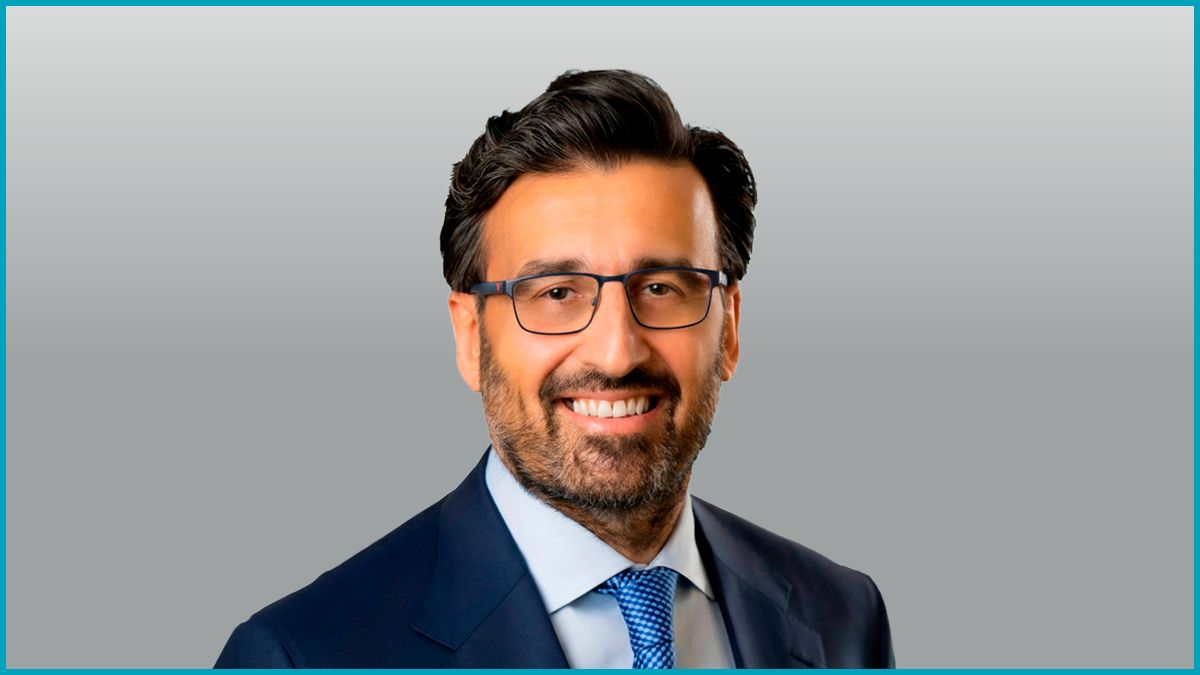
For Min Zeng, portfolio manager at Fidelity, the more significant development is the shifting approach to inflation.
Rather than focus primarily on lifting underlying inflation towards 2%, policymakers are increasingly concerned with keeping it sustainably around that level and preventing further inflationary pressures from becoming entrenched.
Despite the tightening, financial conditions remain accommodative, leaving scope for additional rate increases. However, the timing remains uncertain, with December 2026 and January 2027 emerging as potential dates for the next move.
Against this backdrop, Fidelity continues to favour Japanese financial stocks.
Higher borrowing rates are supporting banks’ net interest income, while resilient credit demand and positive nominal economic growth provide a favourable operating environment.
Yet Zeng believes the investment opportunity is evolving. Much of the initial valuation uplift from expectations of higher rates and Japanese government bond yields has already occurred. Future share-price performance will therefore depend more heavily on earnings delivery, improving return on equity (ROE) and shareholder distributions.
Fidelity sees particular appeal in selected regional banks , given they offer direct exposure to rising domestic rates.
Further, stronger loan-deposit spreads, improving capital efficiency and potential increases in shareholder distributions could support further upside.
The preference over some larger megabanks is largely valuation-driven, given regional lenders’ greater sensitivity to domestic monetary normalisation.
Among megabanks, Mizuho remains a preferred holding for Zeng, supported by potential growth in domestic net interest income, fee revenues and ROE.
The implications of higher rates extend beyond financials, although Fidelity expects the direct earnings impact of modest additional increases to remain manageable for much of the Japanese equity market.
Highly leveraged sectors, including real estate, utilities and certain transportation businesses, face greater exposure to rising financing costs. Conversely, cash-rich companies could benefit from increased interest income.
This divergence is sharpening the importance of company fundamentals, particularly pricing power, balance-sheet strength, valuations and earnings resilience.
Risks also remain for banks, including a flatter yield curve, intensifying competition for deposits, securities-market volatility and potential deterioration in credit quality.
For fund selectors assessing Japanese equity exposure, Fidelity’s view is that the opportunity is becoming increasingly stock specific.
Rather than simply buying companies expected to benefit from rising rates, investors should focus on those capable of translating monetary normalisation into sustainable earnings growth, stronger ROE and improved shareholder returns.
It aims to generate income that includes senior direct lending, credit secondaries, fund financing, royalties, opportunistic credit, and liquid credit.
Seviora Capital is integrating with Azalea and SeaTown to create a new combined asset manager.

Almost 90% of Gen Z collectors who inherited works retained them, according to Art Basel and a UBS survey.