BlackRock upgrades DM equities on AI-driven earnings
The BlackRock Investment Institute also downgraded high yield to neutral and DM government bonds to underweight.


The BlackRock Investment Institute also downgraded high yield to neutral and DM government bonds to underweight.
The BlackRock Investment Institute also downgraded high yield to neutral and DM government bonds to underweight.

The familiar playbook is giving way to a regime where multiple forces interact in less predictable ways, says Wellington Management’s Andrew Sharp-Paul.
The BlackRock Investment Institute also downgraded high yield to neutral and DM government bonds to underweight.
The BlackRock Investment Institute also downgraded high yield to neutral and DM government bonds to underweight.

The two alternative investment firms are partnering up to create venture debt solutions for investors in Asia.
Sponsored by Loomis Sayles & Natixis
The Growth Equity Strategies Team at Loomis Sayles, an affiliate of Natixis Investment Managers, demonstrates that patience, discipline and conviction result in consistent, peer-leading risk-adjusted compounding over cycles.
The BlackRock Investment Institute also downgraded high yield to neutral and DM government bonds to underweight.
The familiar playbook is giving way to a regime where multiple forces interact in less predictable ways, says Wellington Management’s Andrew Sharp-Paul.
The BlackRock Investment Institute also downgraded high yield to neutral and DM government bonds to underweight.
The BlackRock Investment Institute also downgraded high yield to neutral and DM government bonds to underweight.
The familiar playbook is giving way to a regime where multiple forces interact in less predictable ways, says Wellington Management’s Andrew Sharp-Paul.

FSA highlights five actively managed global equity funds with an overweight position in Korean listed memory chip maker SK Hynix.
FSA highlights five actively managed global equity funds with an overweight position in Korean listed memory chip maker SK Hynix.

This week FSA provides a quick comparison of two international equity funds: Nomura Global Multi – Theme Equity fund and T. Rowe Price Global Value Equity fund.

In the new term, Amy Lo will continue to serve as chairman of the ExCo, with Edmund Kam serving as vice chairman.
In the new term, Amy Lo will continue to serve as chairman of the ExCo, with Edmund Kam serving as vice chairman.

The bank names Anchalee Bunsongsikul as CEO of LGT Securities (Thailand)
The familiar playbook is giving way to a regime where multiple forces interact in less predictable ways, says Wellington Management’s Andrew Sharp-Paul.

During the past two years, the Wellington solutions team has shifted from relying on high-conviction, concentrated equity managers to a more balanced approach that emphasises benchmark-relative risk and core equity allocations.
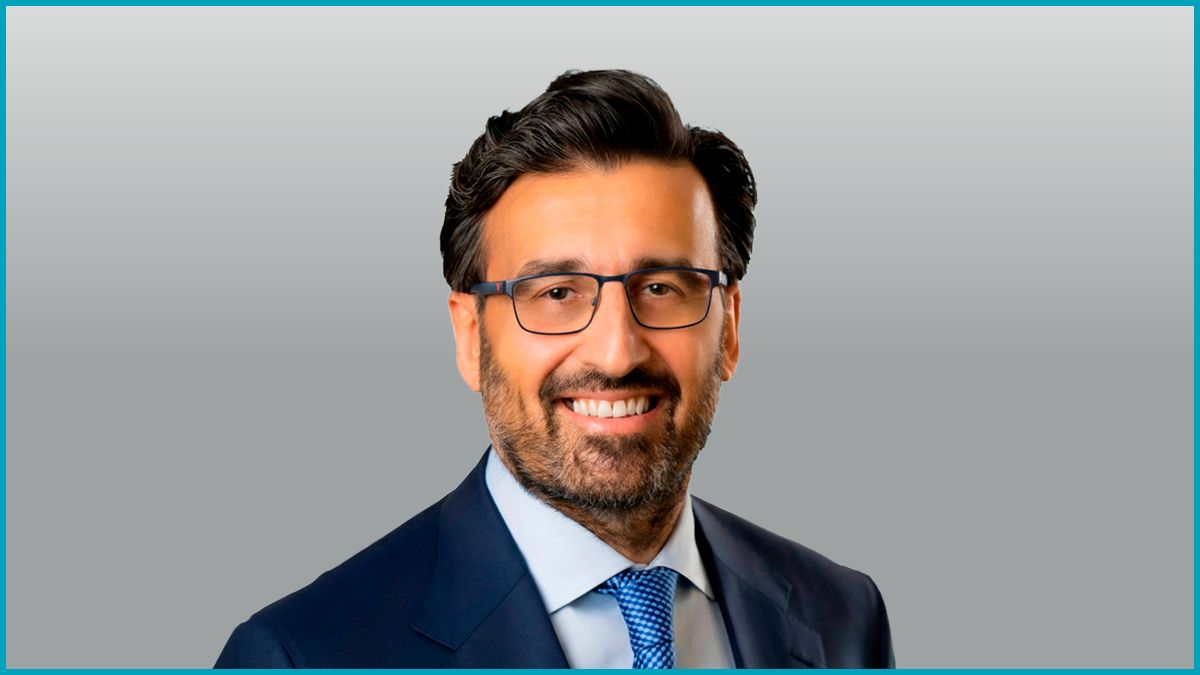
“This transition has been driven by challenges such as increased market concentration (especially in tech stocks), factor volatility, and governance pressures on active risk,” Andrew Sharp-Paul, solutions director for Apac, Wellington Management, told FSA in a recent interview.
In fact, the investment landscape isn’t just shifting; it is becoming structurally more complex. Hence, the familiar playbook built around stable inflation, predictable policy, and reliable asset relationships is giving way to a regime where multiple forces interact in less predictable ways, according to Sharp-Paul.
Hence, investors may need to move beyond static, cycle-based frameworks and toward more flexible, regime-aware approaches that can adapt as conditions evolve.
“The core of the new approach combines fundamental and quantitative techniques,” Sharp-Paul said. Wellington uses quantitative methods to optimize portfolio construction and deploys fundamental research to drive security selection.
“The aim is to maximise security selection risk while minimising unintended factor exposures, resulting in portfolios that are better aligned with manager skill and more resilient to market shifts,” he said.
“The approach leads to portfolios that are both more resilient and better aligned with desired risk profiles.”
In an environment of severe macroeconomic changes, notably higher and more volatile inflation, geopolitical uncertainties, and shifting global growth, traditional equity-bond diversification is less reliable.
“As a result, Wellington is advising clients to build portfolios with greater flexibility and resilience by incorporating diversified strategies, such as flexible fixed income, hedge funds, liquid alternatives, and commodities (including gold),” Sharp-Paul said.
The main purpose and consequence of recalibrating portfolios is to “reinforce the core”.
Active risk must be deliberate, for example, “reinforcing core equities with benchmark-aware global strategies that seek to extract idiosyncratic alpha without relying on large top-down bets,” he said.
Investors should also “favour nimble over static, for instance, by considering rotational fixed income strategies that can shift across credit, rates, and quality as the opportunity set changes”.
Finally, according to Sharp-Paul, “resilience must be intentional”, for example, by adding regime-aware diversifiers such as hedge funds and commodities to broaden return streams and strengthen portfolio durability.
“Today’s investment landscape is increasingly complex, with multiple major themes, including AI, debt, geopolitics, and climate, intersecting and amplifying uncertainty,” Sharp-Paul said
“Investors should focus on where and how risk is taken, build flexibility across and within asset classes, and enhance portfolio resilience through complementary allocations and stress-tested diversification.”
But they should be cautious about thematic investing unless accompanied by robust risk management, as large themes are often interconnected and prone to shocks.”
“Ultimately, investors should emphasise targeted risk-taking, maintain flexibility, and build resilience through stress-tested diversification, rather than relying solely on thematic or concentrated strategies,” Sharp-Paul concluded.
The BlackRock Investment Institute also downgraded high yield to neutral and DM government bonds to underweight.
The familiar playbook is giving way to a regime where multiple forces interact in less predictable ways, says Wellington Management’s Andrew Sharp-Paul.

The MFS Meridian Funds – Blended Research US Core Equity fund integrates quantitative and fundamental insights.