BlackRock warns sticky inflation constrains central banks
The BlackRock Investment Institute is reiterating an overweight call on US and EM equities despite the inflationary pressures from the Middle East conflict.


The BlackRock Investment Institute is reiterating an overweight call on US and EM equities despite the inflationary pressures from the Middle East conflict.
The BlackRock Investment Institute is reiterating an overweight call on US and EM equities despite the inflationary pressures from the Middle East conflict.
Chief investment officer Vincenzo Vedda is taking over the illiquid assets business from CEO Stefan Hoops.
Investors can join the surge in cryptocurrency adoption by allocating to the equities of companies behind the growth, says Shen Tan, managing director, Asia, Lazard Asset Management.
Investors can join the surge in cryptocurrency adoption by allocating to the equities of companies behind the growth, says Shen Tan, managing director, Asia, Lazard Asset Management.

The new private credit vehicle will invest in credit instruments backed by infrastructure assets.
Sponsored by Loomis Sayles & Natixis
The Growth Equity Strategies Team at Loomis Sayles, an affiliate of Natixis Investment Managers, demonstrates that patience, discipline and conviction result in consistent, peer-leading risk-adjusted compounding over cycles.
Investors can join the surge in cryptocurrency adoption by allocating to the equities of companies behind the growth, says Shen Tan, managing director, Asia, Lazard Asset Management.

BlackRock has received approval from the Monetary Authority of Singapore (MAS) to launch the fund as part of the MAS Equity Market Development Programme (EQDP).
The BlackRock Investment Institute is reiterating an overweight call on US and EM equities despite the inflationary pressures from the Middle East conflict.
The BlackRock Investment Institute is reiterating an overweight call on US and EM equities despite the inflationary pressures from the Middle East conflict.
Investors can join the surge in cryptocurrency adoption by allocating to the equities of companies behind the growth, says Shen Tan, managing director, Asia, Lazard Asset Management.

This week FSA provides a quick comparison of two Asia ex-Japan equity funds: the Eastspring Inv Asian Equity Income fund and the Jupiter Asia Pacific Income fund.
This week FSA provides a quick comparison of two Asia ex-Japan equity funds: the Eastspring Inv Asian Equity Income fund and the Jupiter Asia Pacific Income fund.

Investors should remain invested, diversify, and take a long-term view, says Fidelity’s HK head, Charlotte Chan.

Ben Durrant explains why the team has an ‘apparently low’ active share.
Ben Durrant explains why the team has an ‘apparently low’ active share.
The US-headquartered asset manager T. Rowe Price has hired Shuai Shao for the role of head of China business.
Investors can join the surge in cryptocurrency adoption by allocating to the equities of companies behind the growth, says Shen Tan, managing director, Asia, Lazard Asset Management.

There has been explosive growth in the adoption of cryptocurrencies and in their value during the past three decades. The trajectory is like the expansion of the internet’s use from its early days to its near-universal application and dependence today, according to Shen Tan, managing director, Asia, Lazard Asset Management.
The internet grew from 100 million users in 1997 to 1 billion by 2022. Cryptocurrencies, currently valued at $2.3trn, compared with equities and fixed income which are both $100trn in size each, have room to grow significantly when the adoption rate accelerates.
“Bitcoin’s value is correlated to global liquidity, with its price rising during periods of increased liquidity,” said Tan. “Its value is driven by supply and demand, not traditional discounted cash flow models.”
“The market for digital assets is expected to grow significantly, with the risk of not investing in this asset class being greater than the risk of losing money,” he said.
“Indeed, digital assets, including NFTs and tokenized assets, will have a much larger ecosystem and potential faster adoption rates than even that achieved by the internet,” Tan added.
Recent US legislation will provide a further boost to cryptocurrency adoption. The Genius Act, signed in July 2025, establishes a federal regulatory framework for payment stablecoins, while the Digital Asset Market Clarity Act (2025-2026) aims to create a federal framework for digital assets more broadly.
However, for retail investors, there is often operational complexity in opening and funding bitcoin (and other cryptocurrencies) accounts, or in making fiat–stablecoin conversions.
As an alternative, Lazard offers a strategy that invests in equities related to the crypto/digital asset ecosystem, aiming to smooth volatility and capture upside potential. It comprises around 50 to 70 stocks that Tan identifies as “miners, disrupters, challengers and enablers”.
“The portfolio has outperformed the MSCI World Index since inception in 2022, despite the challenges during the ‘Crypto Winter’ in 2022,” said Tan.
Miners are companies that validate and secure transactions on a blockchain network in exchange for cryptocurrency; disrupters are directly involved in cryptocurrency exchanges and treasuries, or blockchain technology.
Challengers are transformational payments and finance companies integrating related technologies into their operations, and enablers produce hardware and infrastructure that enable the use of digital asset technologies.
“The strategy aims to capture as much of the upside of cryptocurrency/digital assets while minimising the downside, providing smoother investment returns and greater transparency compared with direct crypto holdings,” Tan said.
The investment process involves using data science techniques and large language models to rank more than 20,000 stocks based on keywords related to digital assets. For example, using keywords that include: bitcoin, digital assets, and stablecoins etc.
“Data science tools evaluate equities based on their price sensitivity to cryptocurrencies, revenue from digital assets activities, and language analysis of transcripts, business descriptions and filings,” Tan said.
Next, fundamental analysis is deployed to vet the theme-related universe to establish strong alignment, to categorise businesses by the nature of their relevant activities, evaluate the level of significance to the theme, and guide portfolio construction, including segment weights. Bottom-up research is then conducted on sub-industries and companies.
Finally, “quantitative tools are utilised for optimization of the portfolio based on exposures and risk, and for the integration of fundamental inputs, including segmentation and relevance scoring,” said Tan.
The strategy’s portfolio comprises (on 31 December 2025) about 50% of companies designated as disrupters, around 22% as miners, and 20% as challengers. Less than 10% is allocated to enablers.
Among the top 10 individual holdings, seven are disruptors, including Robinhood, Circle, and Coinbase Global, and three are miners, such as Hut 8, Cipher Mining, and IREN Limited.
There is a small-cap and US bias in the portfolio composition, not least because of the impetus provided by the Genius and Clarity Acts. Across industry sectors, there is a tilt towards software and service, and financial services.
“The strategy is not for everyone, but it is suitable for first-time investors who are interested to invest in digital assets but want to do so in an environment they are familiar with,” said Tan.
“It should also appeal to investors who are more cautious about direct purchases of cryptocurrencies – and their volatility – and are reassured by the transparency and regulatory framework provided by publicly-listed equities.”
Indeed, Tan believes that digital assets will become a significant part of all investors’ portfolios over time.
The BlackRock Investment Institute is reiterating an overweight call on US and EM equities despite the inflationary pressures from the Middle East conflict.
Chief investment officer Vincenzo Vedda is taking over the illiquid assets business from CEO Stefan Hoops.
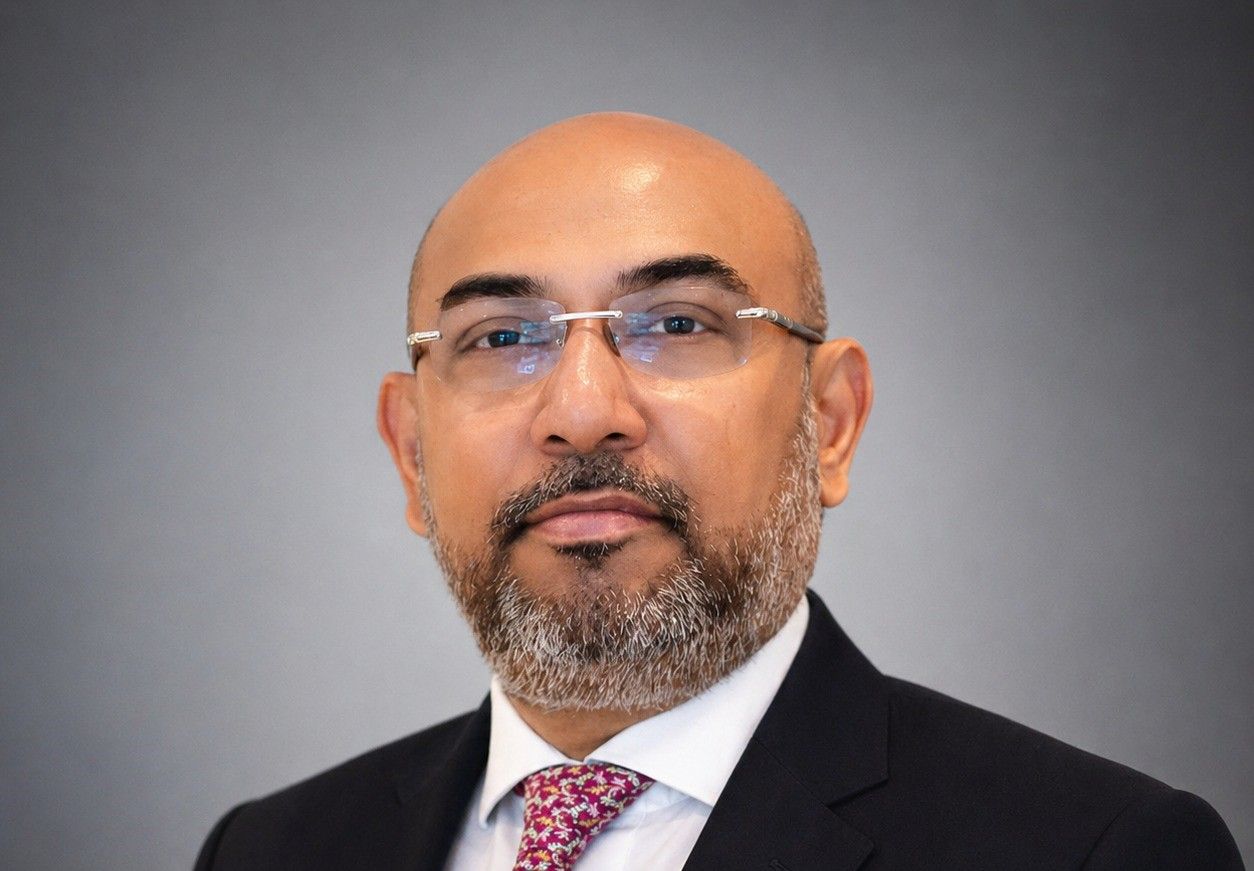
Gautam Anand will lead the Global India private banking franchise for HSBC.