Nvidia signs MoU with Apollo, Blackstone, BlackRock and others for $500bn infrastructure financing
The world’s largest asset managers will raise $500bn in third-party capital to build “AI factories”.

The world’s largest asset managers will raise $500bn in third-party capital to build “AI factories”.
The world’s largest asset managers will raise $500bn in third-party capital to build “AI factories”.

The BlackRock Investment Institute favours equities, durable income and limiting duration risk on a strategic horizon of five years or more.
The world’s largest asset managers will raise $500bn in third-party capital to build “AI factories”.
The world’s largest asset managers will raise $500bn in third-party capital to build “AI factories”.

It uses Kinexys by J.P. Morgan’s multi-chain asset tokenisation platform, so clients will be able to use smart contracts.
Sponsored by Loomis Sayles & Natixis
The Growth Equity Strategies Team at Loomis Sayles, an affiliate of Natixis Investment Managers, demonstrates that patience, discipline and conviction result in consistent, peer-leading risk-adjusted compounding over cycles.
The world’s largest asset managers will raise $500bn in third-party capital to build “AI factories”.
It uses Kinexys by J.P. Morgan’s multi-chain asset tokenisation platform, so clients will be able to use smart contracts.
The BlackRock Investment Institute favours equities, durable income and limiting duration risk on a strategic horizon of five years or more.
The BlackRock Investment Institute favours equities, durable income and limiting duration risk on a strategic horizon of five years or more.

More than half value a hybrid approach combining AI with the expertise of financial professionals when making decisions.

FSA looks at the best performing global equity funds since the start of June during the volatile unwind of a crowded AI trade.
FSA looks at the best performing global equity funds since the start of June during the volatile unwind of a crowded AI trade.
More than half value a hybrid approach combining AI with the expertise of financial professionals when making decisions.

Wealth management income for 1H26 rose 16% from the previous year.
Wealth management income for 1H26 rose 16% from the previous year.

AllianzGI will also have long-term access to UOB’s retail client network.
Geopolitics, demographics, and the cost of capital will drive markets in 2026, according to Janus Henderson Investors’ Matthew Bullock.

Investment managers need a clear, solidly based vision to withstand the noise that daily affects asset prices. Amid the deluge of data, information, media opinion, and ambiguous public policy statements, strategists must remain firm in their convictions while also seizing short-term opportunities.
“Excessive risk-taking is unnecessary in the current environment. Securitized debt, investment-grade credit, and flexible multi-sector strategies could be positioned to navigate next year’s volatility,” Matthew Bullock, head of portfolio construction and strategy, EMEA & APAC, Janus Henderson Investors, told FSA.
Bullock identifies three main drivers of returns next year: geopolitics, demographics, and the cost of capital.
Geopolitics encompasses several influential factors. Political developments have a broad impact, as seen in government actions in the US and across Europe. Armed conflicts throughout the world, as well as frequent disputes tariffs and their effects on trade, will also play significant roles.
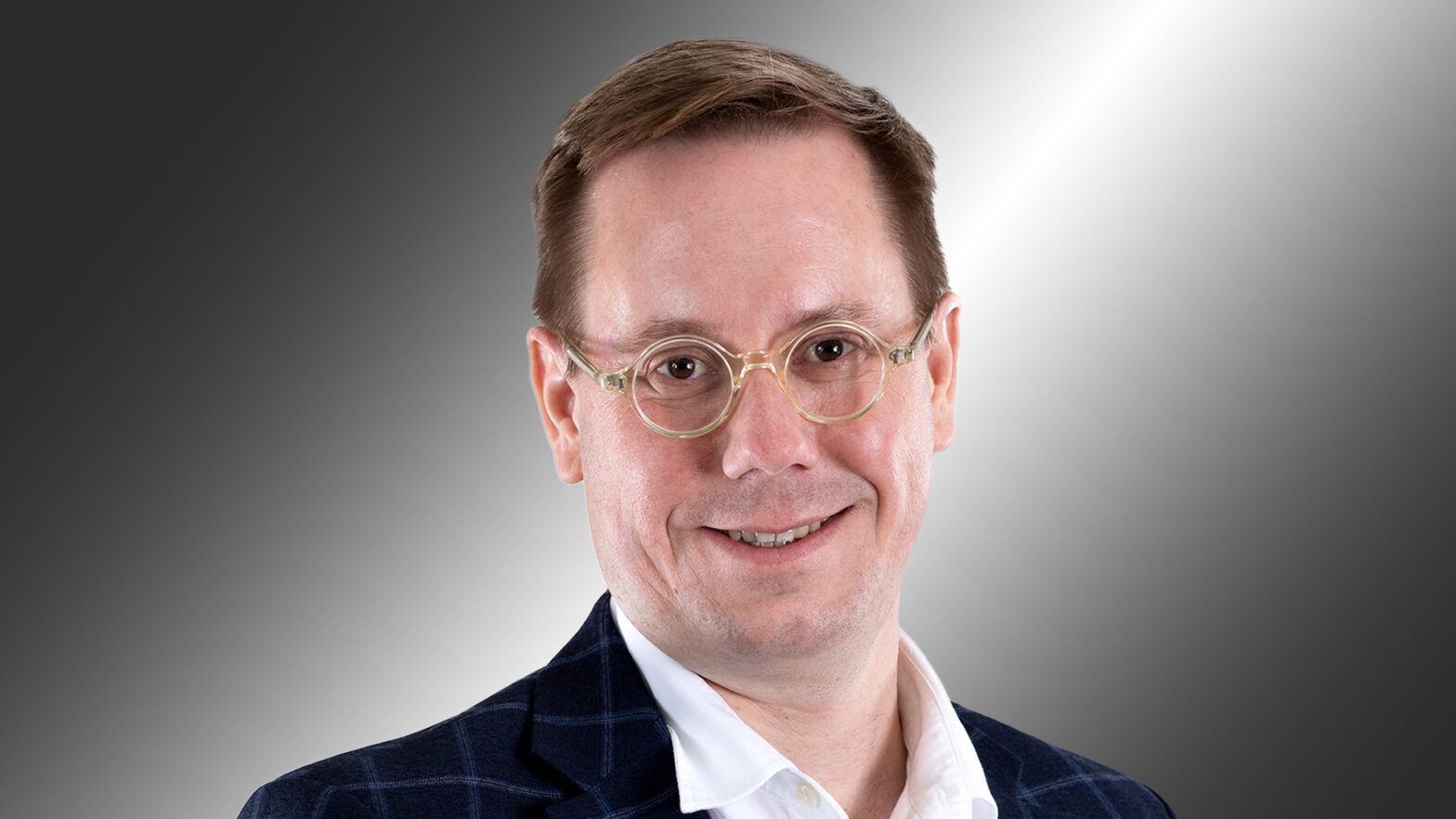
“We believe geopolitics will remain a primary market driver, shaping trends into 2026 and beyond,” said Bullock (main picture). Janus Henderson’s focus within the geopolitical theme includes three areas: Europe, small-cap companies, and absolute returns.
In Europe, war in Ukraine and unremitting US tariff challenges have heightened policymakers’ awareness of the need for growth and reform.
“Our global small-cap manager sees opportunities in Europe, where small-cap stocks have been out of favour. Small-cap companies generally have lower debt levels than large-cap companies, making their debt more manageable,” said Bullock. “Valuations are also attractive.”
Janus Henderson addresses this with an active approach and dedicated small-cap teams. “As allocators, we support their search for opportunities worldwide, and, notably, among the over 6,000 small-cap stocks accessible, the average small-cap stock is covered by only about three analysts,” said Bullock.
Meanwhile, demographic shifts, particularly an aging population, will increase demand for nursing homes, hospitals, and property. The resulting healthcare needs are significant, and the evolution of AI will play a major role in addressing these challenges, according to Bullock.
Among AI, he prefers to invest in businesses with legitimate technology and real value potential rather than take broad index exposure.
“Healthcare is defensive but exciting when combined with technology, especially AI and robotics, to meet aging population needs and improve diagnostics and operations,” Bullock said. “AI’s potential in diagnosis and the evolution of robotics in operations is significant, and with an aging population, demand will only increase.
Moreover, there is growing societal support for sustainability. Our current methods of power generation and resource use remain unresolved, Bullock believes.
For example, the UK has made progress in renewable energy, with Scotland producing surplus wind energy at times. However, challenges remain in efficiently distributing this energy. Another issue is the infrastructure for electric vehicles.
“Electric vehicle adoption is increasing in the UK and Europe, but grid limitations hinder the expansion of charging infrastructure. Connecting new chargers can take years, sometimes over a decade,” said Bullock.
“This situation is unsustainable, but improvements are expected over time,” he said. “For example, many charging points in Scotland still require outdated payment methods, highlighting the need for infrastructure upgrades.”
Finally, while interest rates have begun to decline, they are not returning to previous lows, which means income levels remain attractive.
“To address positioning, with absolute yield levels high, there’s no reason to move down the credit curve or to extend duration,” Bullock said.
In particular, triple-A securitized, floating-rate instruments can achieve potential returns if current spread premia over equivalently rated corporate credit persist.
Janus Henderson expects a steepening of the 10-year and 20-year US Treasury yield curves as inflation concerns emerge, while the Federal Reserve continues efforts to control inflation amid political pressure to lower rates.
“That’s why we like the securitized space. These are floating-rate securities that provide a yield buffer,” said Bullock. “When actively managed and backed by high-quality assets, securitization may provide income potential, subject to market conditions.”
Assimilating these three major factors – geopolitics, demographics, and the cost of capital – Janus Henderson’s absolute return methodology has delivered long-term single-digit returns with very low volatility, comparable with fixed income.
“We focus on identifying mispriced securities through bottom-up analysis, rather than pursuing outsized returns or excessive risk,” said Bullock.
“The current market, influenced by retail investors and volatility, is well-suited to this approach, and it’s best to wait for those moments to take advantage.”
Bullock’s key message is that bottom-up stock selection focuses on company quality rather than just market metrics. This approach applies across asset classes and generates returns without taking excessive risk.
More than half value a hybrid approach combining AI with the expertise of financial professionals when making decisions.

According to insights from 225 technology leaders.
Wealth management income for 1H26 rose 16% from the previous year.