JPMAM: ‘mildly pro-risk’ on equities
JP Morgan Asset Management’s Sylvia Sheng is overweight equities for the next 12 to 18 months.


JP Morgan Asset Management’s Sylvia Sheng is overweight equities for the next 12 to 18 months.
JP Morgan Asset Management’s Sylvia Sheng is overweight equities for the next 12 to 18 months.

Bank of East Asia wealth management and high-net-worth clients will get access to some Partners Group private market investments.
Bank of East Asia wealth management and high-net-worth clients will get access to some Partners Group private market investments.

The deal focuses on partnership to drive the next phase of long-term growth.
Sponsored by Loomis Sayles & Natixis
The Growth Equity Strategies Team at Loomis Sayles, an affiliate of Natixis Investment Managers, demonstrates that patience, discipline and conviction result in consistent, peer-leading risk-adjusted compounding over cycles.
JP Morgan Asset Management’s Sylvia Sheng is overweight equities for the next 12 to 18 months.

The asset manager is expanding its systematic core equity suite.

But in Asia Pacific, wealth transfer is seen as a family milestone compared with Europe and North America, according to a UBS GWM report.
But in Asia Pacific, wealth transfer is seen as a family milestone compared with Europe and North America, according to a UBS GWM report.
JP Morgan Asset Management’s Sylvia Sheng is overweight equities for the next 12 to 18 months.
But in Asia Pacific, wealth transfer is seen as a family milestone compared with Europe and North America, according to a UBS GWM report.
But in Asia Pacific, wealth transfer is seen as a family milestone compared with Europe and North America, according to a UBS GWM report.
Bank of East Asia wealth management and high-net-worth clients will get access to some Partners Group private market investments.
As markets fragment and data explodes, data and technology-driven platforms built for scale are well-positioned to consistently create an information advantage to uncover insights before the rest of the market does.


Longevity and success in systematic investing are not simply a result of years in operation. They require accumulated intellectual property, research archives and lived experiences across market cycles. Even then, outperformance is not a given.
In practical terms, making insights count relies on being able to synthesise more data, quicker, and to extract economically intuitive signals before they are fully priced.
This is the focus of Goldman Sachs’ Quantitative Investment Strategies (QIS) team, which has a track record of data-driven investing of over 35 years. During that time, the goal has been to refine a single idea: that durable alpha comes from processing information better, faster and more consistently than the rest of the market, uncovering opportunities before they become mainstream.
It helps that this is part of an organisational mindset. The QIS team is able to consume hundreds of datasets daily based on the support of an annual firm-wide data and technology budget. “We are able to access more data thanks to the broader resources of Goldman Sachs,” said Alison Lau, managing director, head of public equity client portfolio management in Asia Pacific Ex-Japan.
But access alone is not enough. The edge lies in converting raw information into systematic, repeatable insights.
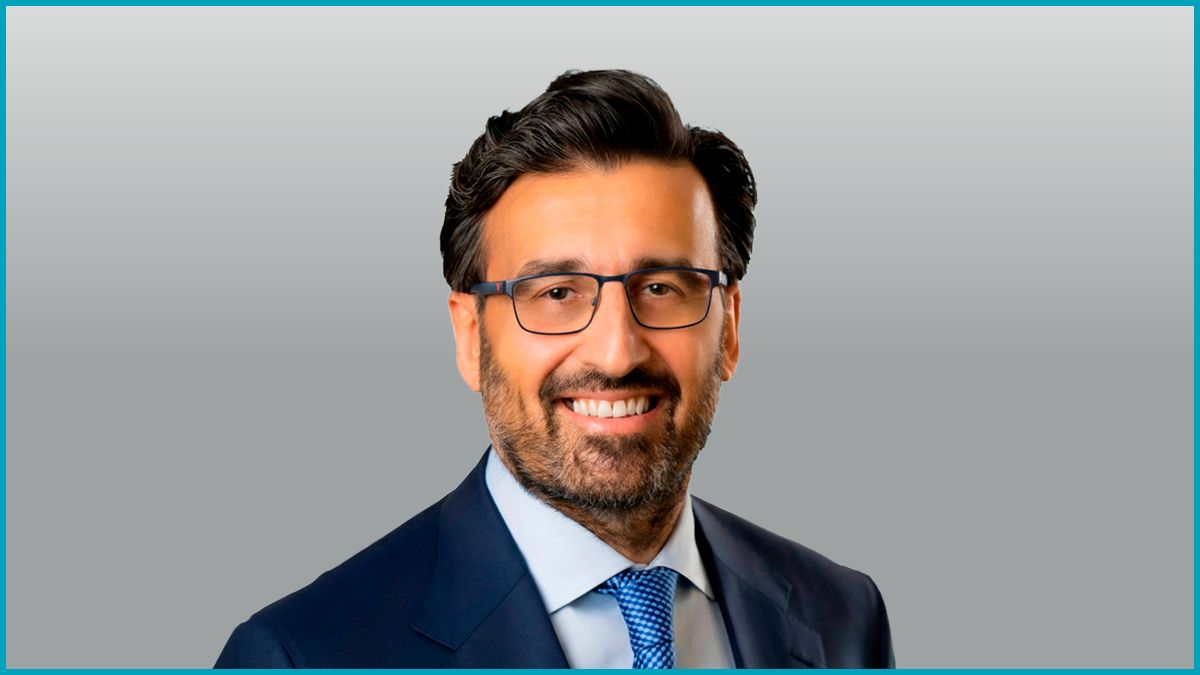
With investing today becoming more complex as data volumes explode and news cycles accelerate, managers able to analyse information at scale – and interpret it with discipline – are better placed to generate consistent alpha, added Lau (pictured). “This competitive edge drives our investment process.”
The QIS platform offers an institutional memory that few quant entrants can replicate.
New researchers can leverage the endeavours of prior portfolio managers and data scientists, with access to a deep research library and documented evidence of what worked – and didn’t work – in different regimes.
This is important in periods of stress, Lau explained. During the liquidity shock of March 2020, for example, the team observed not just drawdowns, but the breakdown of correlations and co-movements across strategies. When subsequent liquidity crunches hit, portfolios were structured with a clearer understanding of how signals behave under pressure. For allocators, that translates into resilience as well as return.
More broadly, Lau describes the QIS philosophy as “fundamental thinking, done systematically”. Every signal is grounded in economic intuition.
Over the past decade, advancements in AI have enabled the team to process entire earnings transcripts, regulatory filings, sell-side research and news flows in one pass, capturing nuance and tone at scale.
Take sentiment, she explained, as a cornerstone of discretionary analysis. Around 2010, the approach to capture sentiment around a company relied largely on counting positive or negative words. With the introduction of transformer-based language models, context has become measurable.
The result is a sentiment framework that mirrors what a fundamental analyst would do, but applied consistently across thousands of companies and continually updated.
Beyond sentiment, leveraging AI to process a large quantity of various text documents could help discover themes and map corporate networks. For example, when AI-related spending accelerated in late 2023, Lau said the models identified not only semiconductor leaders but also secondary beneficiaries – such as companies supplying ventilation systems for data centres, copper producers tied to power infrastructure, and other linked firms whose exposure was not yet fully recognised.
By systematically identifying these interconnections, portfolios can be positioned ahead of slower price discovery.
Putting the QIS approach into practice, European equities present an appealing allocation – especially given they are generally still underrepresented in global portfolios after years of US concentration.
Notably, the region is structurally fragmented: around 50 countries, more than 20 exchanges, and multiple languages and regulatory regimes. Further, valuations of European equities trade at a discount, dividend yields are higher and fiscal shifts – particularly in infrastructure, defence and energy – point to supportive macro dynamics. Currency trends and diversification considerations strengthen the case.
For discretionary managers, that complexity raises research costs. By contrast, for a systematic platform with scalable data ingestion and multilingual NLP capability, it creates opportunity.
Information in Europe often diffuses more slowly and economic linkages are less obvious, said Lau, pointing to an example of a German auto parts supplier, which may be influenced as much by French consumer confidence or Chinese demand as by domestic conditions. This makes quantitative network models well suited to identifying such non-linear relationships, she added.
Against that backdrop, inefficiencies created by fragmentation and uneven coverage provide fertile ground for systematic alpha.
Identifying inefficiencies is only part of the equation. The Goldman Sachs CORE® framework translates signals into portfolios by balancing fundamentals – quality, valuation and earnings nowcasting – with market dynamics such as sentiment and themes.
Signals span time horizons and styles: some are contrarian, others trend-following; some short-term, others structural. With this in mind, the Goldman Sachs Europe CORE® Equity Portfolio seeks to capture the signals through broad, style-balanced exposure with diversified return drivers and a 25-year live track record.
Risk controls are embedded throughout. The objective is diversified sources of return rather than concentrated factor bets. Outperformance is not driven by persistent value or sector tilts, but by the aggregation of many independently validated signals.
This discipline aims to deliver consistency across up and down markets while limiting unintended exposures.
That includes having a global lens across the US, Europe and Asia, given the interconnectedness of the global equity universe. “We can identify trends in one part of the market that may create opportunities in another,” said Lau. “Being able to leverage our AI infrastructure to draw that connection across companies globally has been very helpful in this market environment to uncover insights that others might miss.”
But in Asia Pacific, wealth transfer is seen as a family milestone compared with Europe and North America, according to a UBS GWM report.
JP Morgan Asset Management’s Sylvia Sheng is overweight equities for the next 12 to 18 months.