JPMAM: ‘mildly pro-risk’ on equities
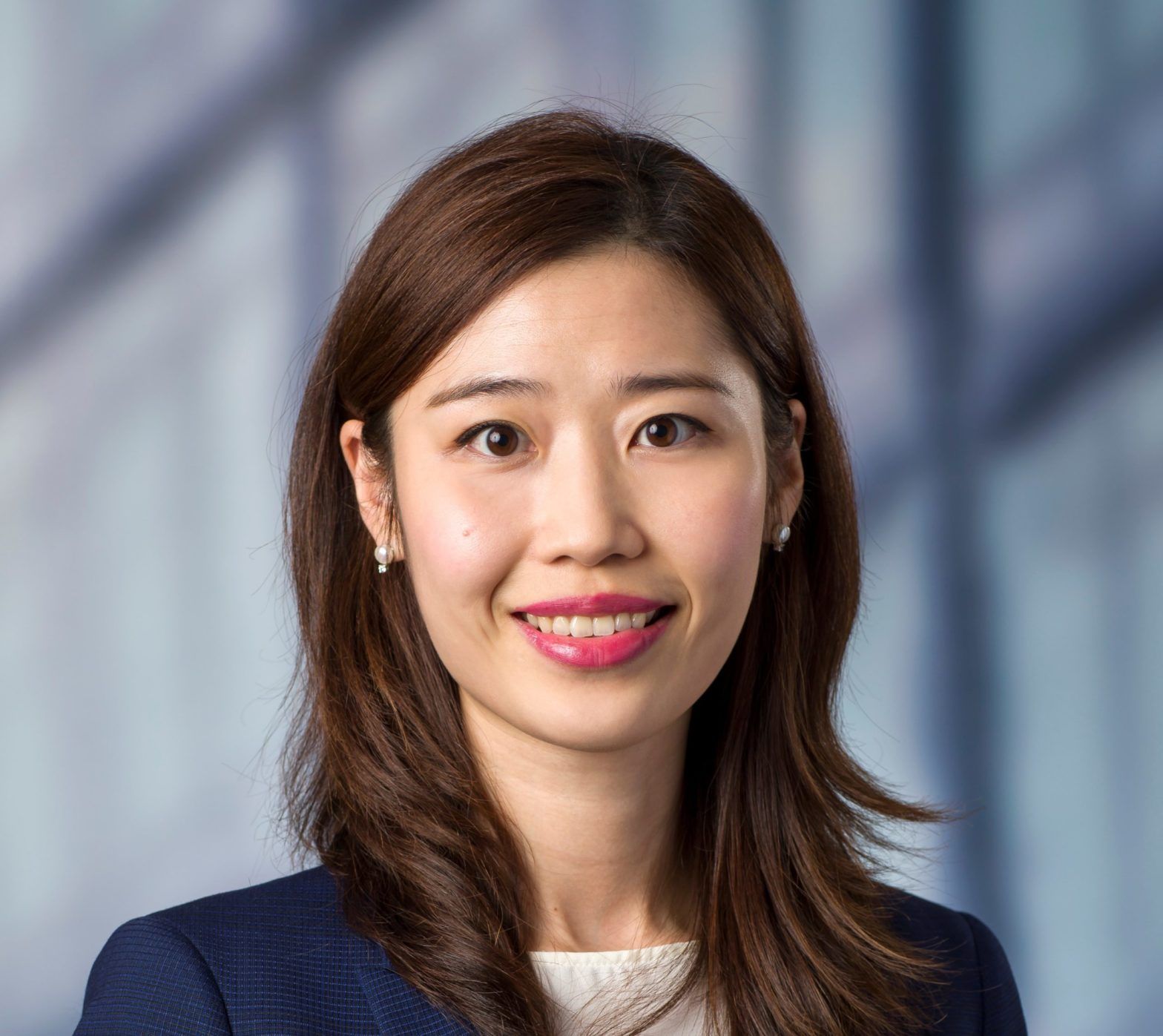
JP Morgan Asset Management’s Sylvia Sheng is overweight equities for the next 12 to 18 months.

JP Morgan Asset Management’s Sylvia Sheng is overweight equities for the next 12 to 18 months.
JP Morgan Asset Management’s Sylvia Sheng is overweight equities for the next 12 to 18 months.

Bank of East Asia wealth management and high-net-worth clients will get access to some Partners Group private market investments.
Bank of East Asia wealth management and high-net-worth clients will get access to some Partners Group private market investments.

The deal focuses on partnership to drive the next phase of long-term growth.
Sponsored by Loomis Sayles & Natixis
The Growth Equity Strategies Team at Loomis Sayles, an affiliate of Natixis Investment Managers, demonstrates that patience, discipline and conviction result in consistent, peer-leading risk-adjusted compounding over cycles.
JP Morgan Asset Management’s Sylvia Sheng is overweight equities for the next 12 to 18 months.
The asset manager is expanding its systematic core equity suite.

But in Asia Pacific, wealth transfer is seen as a family milestone compared with Europe and North America, according to the report.
But in Asia Pacific, wealth transfer is seen as a family milestone compared with Europe and North America, according to the report.
JP Morgan Asset Management’s Sylvia Sheng is overweight equities for the next 12 to 18 months.
But in Asia Pacific, wealth transfer is seen as a family milestone compared with Europe and North America, according to the report.
But in Asia Pacific, wealth transfer is seen as a family milestone compared with Europe and North America, according to the report.
Bank of East Asia wealth management and high-net-worth clients will get access to some Partners Group private market investments.
Fees are a strong predictor of success for funds distributed in Hong Kong, Singapore and Taiwan, according to Morningstar.


Funds with lower fees are more likely to outperform and outlast their expensive peers, according to a Morningstar report of funds distributed in Singapore, Hong Kong and Taiwan.
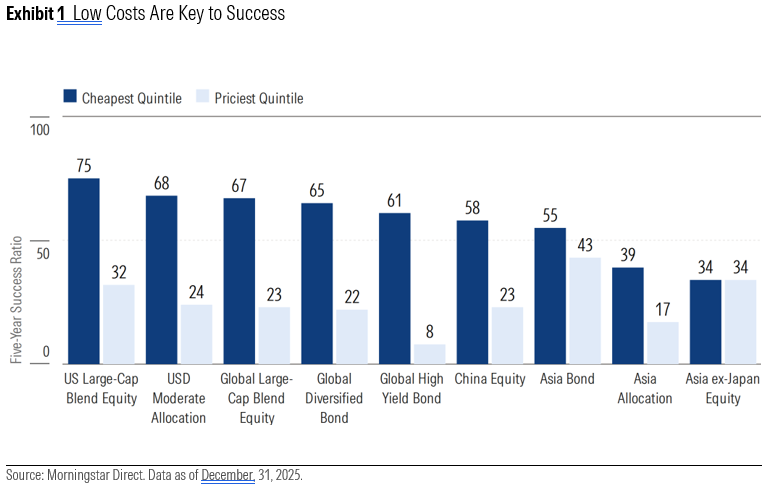
Across all major asset classes that Asian investors typically consider, Morningstar found that fees were a “reliable predictor of long-term success”.
“Our research also shows that cheaper funds tend to stand a better chance of sticking around and delivering better results than more expensive ones,” said Sam Hui, senior analyst, manager research at Morningstar and author of the report.
“At the end of the day, investors earn returns after fees, so costs are something worth paying close attention to before investing.”
The most striking difference in success (measured as the percentage of funds that outperformed and survived their peers) was in the global high-yield bond category.
The report found that the cheapest quintile had a success ratio of 61% compared to the most expensive quintile of 8%. Much of this gap was due to the prominence of Taiwan-domiciled global high yield bonds with high expenses.
There was also a big dispersion in global large-cap-blend equities, where the cheapest funds had a success ratio of 67% compared to 23% from the most expensive quintile. US large-cap-blend equities also had a similar gap of 75% versus 32%.
One reason for this gap is due to the success of cheap S&P 500 index trackers benefitting from the strong performance of index heavyweights Alphabet, Amazon, Apple, Meta, Microsoft and Nvidia.
This “made it even more difficult for the more-expensive active managers to succeed, given their aim to generate value beyond what the market or benchmark offers while managing various risks,” according to the report.
One outlier from the trend was the equity asset class closer to home: the Asia ex-Japan equity category, where success ratio of the cheapest and most expensive quintiles were both 34%.
The success ratio of the cheapest quintile was partly weighed down by the Matthews Asia ex Japan Total Return Equity fund, according to the report: “Matthews Asia has suffered from considerable senior leadership changes since 2020, including the departure of a former CIO and other key investment professionals, including this strategy’s portfolio managers.”
However, despite the same success ratio, the report found that funds in the cheapest fee quintile delivered an average return more than double that of the priciest quintile in the Asia ex Japan equity category, “reinforcing that investors were still better off favoring lower-cost options”.
But in Asia Pacific, wealth transfer is seen as a family milestone compared with Europe and North America, according to the report.
JP Morgan Asset Management’s Sylvia Sheng is overweight equities for the next 12 to 18 months.