5 clean energy funds outpacing the market
Clean energy stocks are recovering as AI’s demand for energy revives the sector.


Clean energy stocks are recovering as AI’s demand for energy revives the sector.
Clean energy stocks are recovering as AI’s demand for energy revives the sector.
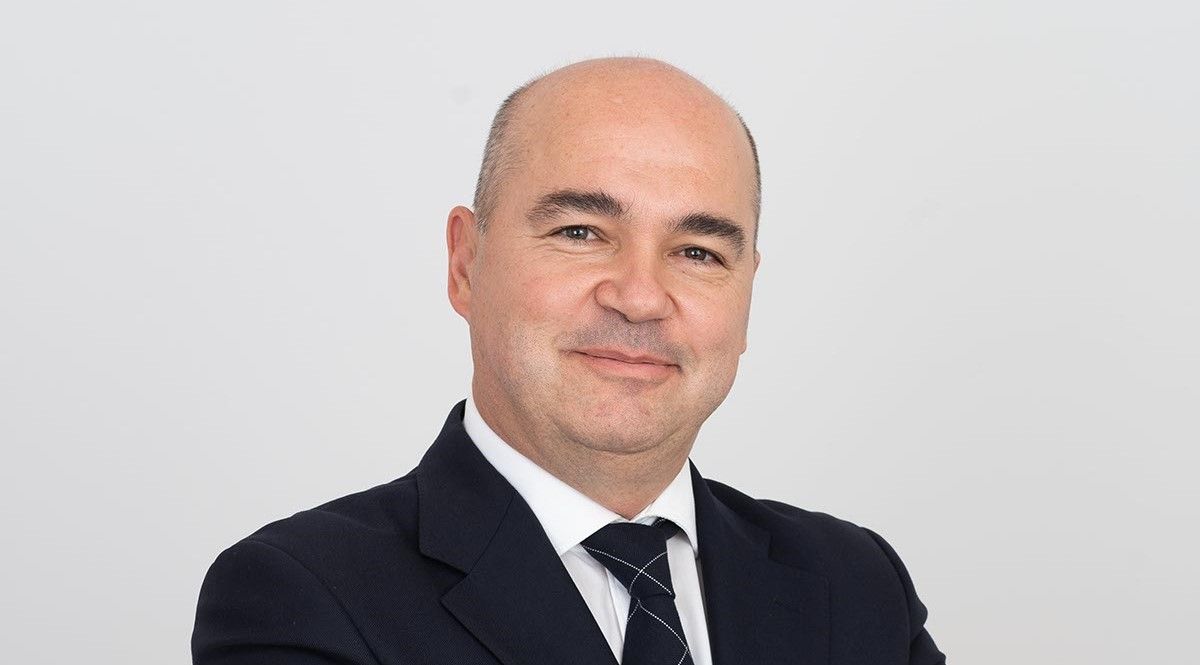
Local presence is crucial for sourcing and underwriting deals, Rafael Torres, co-head of private debt, Pan Europe at Muzinich & Co. tells FSA.
Local presence is crucial for sourcing and underwriting deals, Rafael Torres, co-head of private debt, Pan Europe at Muzinich & Co. tells FSA.
Local presence is crucial for sourcing and underwriting deals, Rafael Torres, co-head of private debt, Pan Europe at Muzinich & Co. tells FSA.

UBP’s head of managed solutions advisory, North Asia, tells FSA why it is not a coincidence that traditional asset managers are now promoting their systematic strategies.

Sponsored by Loomis Sayles & Natixis
The Growth Equity Strategies Team at Loomis Sayles, an affiliate of Natixis Investment Managers, demonstrates that patience, discipline and conviction result in consistent, peer-leading risk-adjusted compounding over cycles.
Local presence is crucial for sourcing and underwriting deals, Rafael Torres, co-head of private debt, Pan Europe at Muzinich & Co. tells FSA.

This week FSA provides a quick comparison of two global fixed income funds: the Neuberger Global Flexible Credit Income fund and the PIMCO GIS Diversified Income fund.

Aberdeen Investments’ head of Apac fixed income, Adam McCabe, prefers high-quality, short-duration bonds.
Aberdeen Investments’ head of Apac fixed income, Adam McCabe, prefers high-quality, short-duration bonds.
Chinese consumer savings migrating into investment products will be a huge opportunity for asset managers, according to Yimei Li, chief executive officer of China Asset Management Company.
Clean energy stocks are recovering as AI’s demand for energy revives the sector.
Clean energy stocks are recovering as AI’s demand for energy revives the sector.
This week FSA provides a quick comparison of two global fixed income funds: the Neuberger Global Flexible Credit Income fund and the PIMCO GIS Diversified Income fund.

The new office aims to strengthen family governance and intergenerational succession capabilities among next-generation family leaders.
The new office aims to strengthen family governance and intergenerational succession capabilities among next-generation family leaders.
Chinese consumer savings migrating into investment products will be a huge opportunity for asset managers, according to Yimei Li, chief executive officer of China Asset Management Company.
Local presence is crucial for sourcing and underwriting deals, Rafael Torres, co-head of private debt, Pan Europe at Muzinich & Co. tells FSA.

European credit offers diversification away from US-centric risks. While the US market has become increasingly competitive, with tighter spreads and lower yields as more capital has flowed in, Europe remains relatively less crowded and more stable in spreads, especially in the lower mid-market segment.
“European private debt typically offers wider spreads and higher yields compared with similarly rated US credits. This is, in part, because there is less competition and a more fragmented market structure,” Rafael Torres, co-head of private debt, Pan Europe at Muzinich & Co, told FSA in an interview.
Moreover, “US credits tend to feature higher leverage and tighter spreads due to competition. European deals in the lower middle market, by contrast, often have lower leverage and more lender-friendly terms, including stronger covenants”.
Muzinich has invested €1.9bn ($2.21bn) in more than 90 transactions, and the platform has investor commitments of €2.4bn, as of March 2026, according to Torres (pictured).
Its pan-European private debt platform was launched over a decade ago as the asset class started to develop in Europe. Its focus is the lower-middle market (companies with EBITDA of €5-25m), a segment it believes is underserved and where lenders can provide flexible financing aligned with each borrower’s strategy.
Muzinich’s Pan European Private debt business is focused on building diversified portfolios of predominantly first-lien secured loans with 40-50 names across 8-10 countries and 15-20 non-cyclical industries.
This is offered under different forms: Muzinich Pan-European Private Debt III, SCSp – a closed-end vehicle targeting institutional investors, an institutional evergreen strategy – a run-off format targeting institutional investors, and a European ELTIF regulated vehicle – semi-liquid format targeting retail/private banking investors
The European market comprises several distinct economies, providing opportunities for skilled local players to source attractive deals. The US market is larger, more mature, and operates as a single, unified market. “Europe is fragmented across jurisdictions, languages, cultures and legal systems, creating more complexity but also more inefficiencies to exploit”.
“Local presence is crucial for sourcing and underwriting deals, unlike the US, where a firm can cover the market from a few offices”.
Muzinich’s approach is defined by “close borrower collaboration via our on-the-ground network,” said Torres. The firm has over 35 investment professionals in seven European countries in eight offices.
“This gives us the jurisdictional knowledge, language and relationships to provide strategic guidance as well as capital to help businesses scale effectively and profitably,” Torres said.
“Muzinich’s managers see hundreds of opportunities and select only a small fraction (3% conversion rate), underpinned by a rigorous selection process and due diligence”.
Muzinich focuses on direct lending to lower mid-market companies, not on fund-of-funds approaches. “This allows for greater control and selectivity over credit quality”.
“Through uni-tranche debt structures we offer both speed and certainty of execution – a key differentiator in competitive or time-sensitive transactions. We actively support buy-and-build strategies and growth financings, building long-term partnerships that often result in repeat business, either through private equity sponsors or with companies directly,” Torres said.
“Asian investors benefit from partnering with managers who have genuine local presence and networks in Europe, ensuring better deal sourcing, filtering, underwriting, and risk management,” he added.
US private credit portfolios are often heavily weighted towards software and tech sectors (sometimes up to 20-30%), which are seen as more volatile and subject to rapid disruption, especially from AI. European portfolios tend to be more diversified across sectors and often include stable, “boring” industries such as food, beverage, and consumer staples.
“European mid-market companies, especially in less cyclical sectors, are more resilient to certain global disruptions, including energy price shocks and supply chain disruptions, that may hit the US or global tech sector harder”.
The typical credit quality in European private debt is in the single-B to double-B range. These are mid-sized companies (with revenues of €50–250 million) that are too small for public markets and often officially unrated, but managers often map their internal ratings to agency equivalents for transparency. Many European funds, especially those targeting institutions, are unleveraged at the fund level, offering more conservative risk profiles.
European private debt funds, particularly semi-liquid and evergreen structures, can also offer attractive net yields (targeting 8–9% net in euro terms), with regular income distribution, which is an important consideration for Asian institutions and private clients, noted Torres.
Ultimately, diversifying the allocation to Europe can help reduce exposure to US-centric risks, for example, macroeconomics, geopolitics, and sectoral concentration, especially as the US market becomes increasingly crowded and less rewarding
Clean energy stocks are recovering as AI’s demand for energy revives the sector.
Local presence is crucial for sourcing and underwriting deals, Rafael Torres, co-head of private debt, Pan Europe at Muzinich & Co. tells FSA.
This week FSA provides a quick comparison of two global fixed income funds: the Neuberger Global Flexible Credit Income fund and the PIMCO GIS Diversified Income fund.