JPMAM: ‘mildly pro-risk’ on equities
JP Morgan Asset Management’s Sylvia Sheng is overweight equities for the next 12 to 18 months.


JP Morgan Asset Management’s Sylvia Sheng is overweight equities for the next 12 to 18 months.
JP Morgan Asset Management’s Sylvia Sheng is overweight equities for the next 12 to 18 months.

Bank of East Asia wealth management and high-net-worth clients will get access to some Partners Group private market investments.
Bank of East Asia wealth management and high-net-worth clients will get access to some Partners Group private market investments.

The deal focuses on partnership to drive the next phase of long-term growth.

Sponsored by Loomis Sayles & Natixis
The Growth Equity Strategies Team at Loomis Sayles, an affiliate of Natixis Investment Managers, demonstrates that patience, discipline and conviction result in consistent, peer-leading risk-adjusted compounding over cycles.
JP Morgan Asset Management’s Sylvia Sheng is overweight equities for the next 12 to 18 months.

The asset manager is expanding its systematic core equity suite.

But in Asia Pacific, wealth transfer is seen as a family milestone compared with Europe and North America, according to a UBS GWM report.
But in Asia Pacific, wealth transfer is seen as a family milestone compared with Europe and North America, according to a UBS GWM report.
JP Morgan Asset Management’s Sylvia Sheng is overweight equities for the next 12 to 18 months.
But in Asia Pacific, wealth transfer is seen as a family milestone compared with Europe and North America, according to a UBS GWM report.
But in Asia Pacific, wealth transfer is seen as a family milestone compared with Europe and North America, according to a UBS GWM report.
Bank of East Asia wealth management and high-net-worth clients will get access to some Partners Group private market investments.
Asian fixed income’s resilience during stress is underpinned by macro fundamentals, says Eastspring’s Rong Ren Goh.

Asian bonds have remained relatively resilient to date, with the JP Morgan Asian Credit Index down less than 1% year to date. Part of this resilience, according to Rong Ren Goh, head of macro and thematics, comes from Asia’s “improving long-term macro fundamentals”.
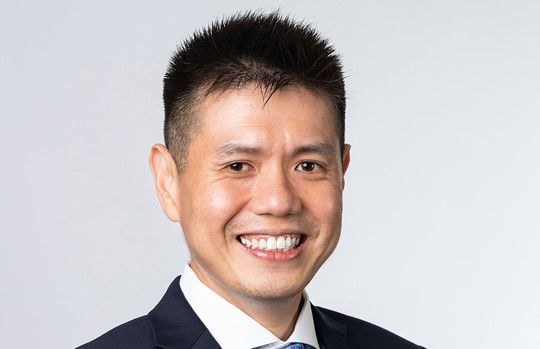
In emerging Asia, fiscal discipline has been steadier, and inflation better contained, he noted. “Policy credibility remains largely intact, and real yields are positive for the right reasons. External balances are also healthier, and domestic savings in the region continue to rise,” Goh (pictured) said.
Moreover, during the Middle East conflict, current account surpluses in many Asian economies can provide some cushion to absorb higher energy costs.
History also shows that Asian US dollar bonds have been more resilient during periods of market stress. This was seen during the 2022 global rates and credit sell-off, when aggressive global monetary tightening drove deep and simultaneous losses across many traditional defensive assets.
In the current Iran war, Asian investment grade bonds have also outperformed US and European IG bondsmonth to date, noted Goh.
“We have also seen correlations between Asian credit and global bond markets decline during periods of heightened stress. This differentiated behaviour can help cushion portfolios during global risk-off episodes.”
But in Asia Pacific, wealth transfer is seen as a family milestone compared with Europe and North America, according to a UBS GWM report.
JP Morgan Asset Management’s Sylvia Sheng is overweight equities for the next 12 to 18 months.