US Treasury’s bond market move leaves investors expecting more
Buyback operations for longer-dated debt doubled.


Buyback operations for longer-dated debt doubled.
Buyback operations for longer-dated debt doubled.

Investors are looking beyond the initial winners of the artificial intelligence (AI) story.
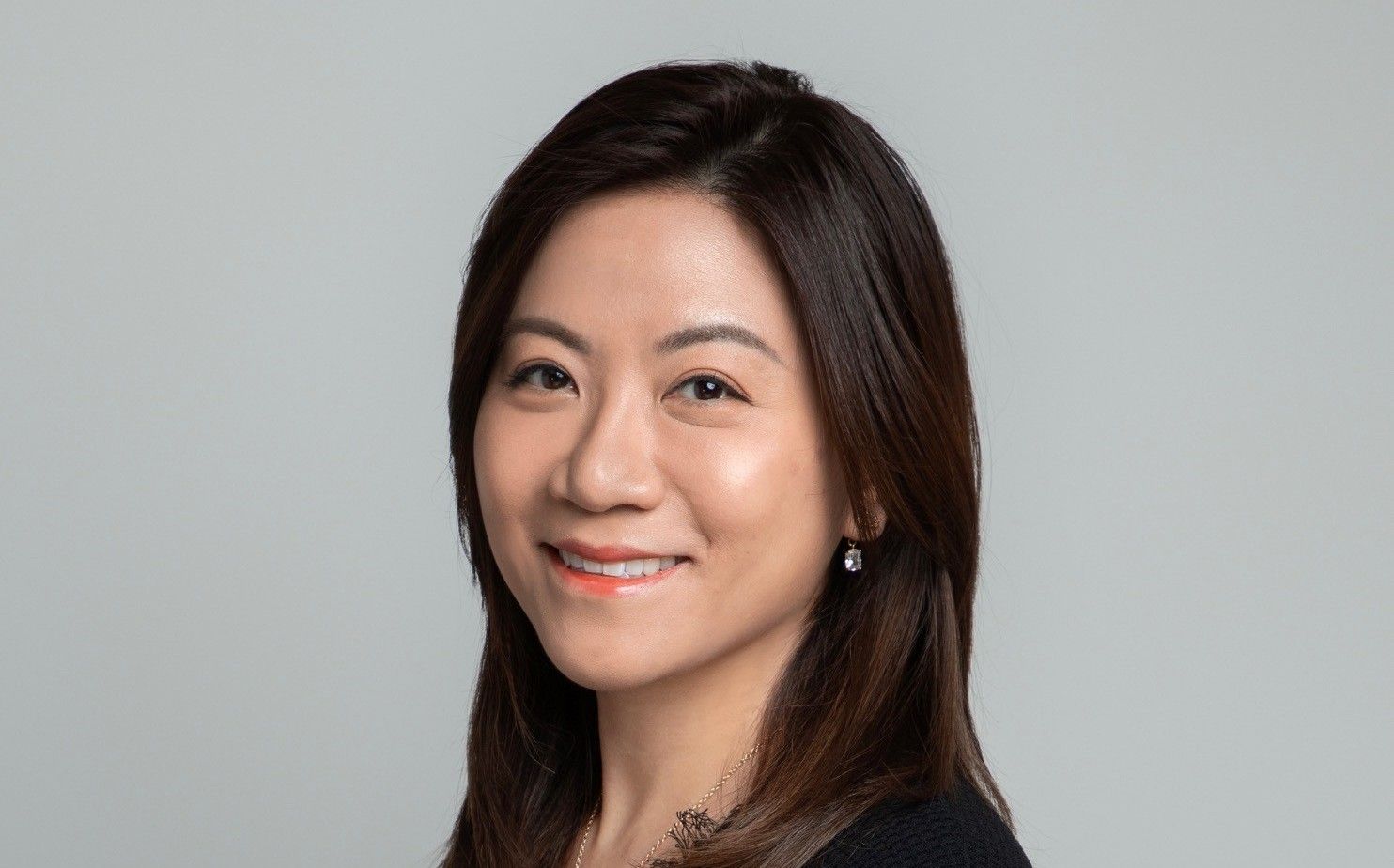
Investors seek exposure to long-term structural themes that are less dependent on short-term economic cycles, says Cora Chiu, managing director, head of investment management North Asia, Deutsche Bank – Private Bank.
Investors seek exposure to long-term structural themes that are less dependent on short-term economic cycles, says Cora Chiu, managing director, head of investment management North Asia, Deutsche Bank – Private Bank.

The Hong Kong-based investment firm said its investment profits were driven by private equity, special situations, structured credit and hedge funds.
Sponsored by Loomis Sayles & Natixis
The Growth Equity Strategies Team at Loomis Sayles, an affiliate of Natixis Investment Managers, demonstrates that patience, discipline and conviction result in consistent, peer-leading risk-adjusted compounding over cycles.
Investors are looking beyond the initial winners of the artificial intelligence (AI) story.
Investors seek exposure to long-term structural themes that are less dependent on short-term economic cycles, says Cora Chiu, managing director, head of investment management North Asia, Deutsche Bank – Private Bank.
Investors are looking beyond the initial winners of the artificial intelligence (AI) story.
Investors are looking beyond the initial winners of the artificial intelligence (AI) story.
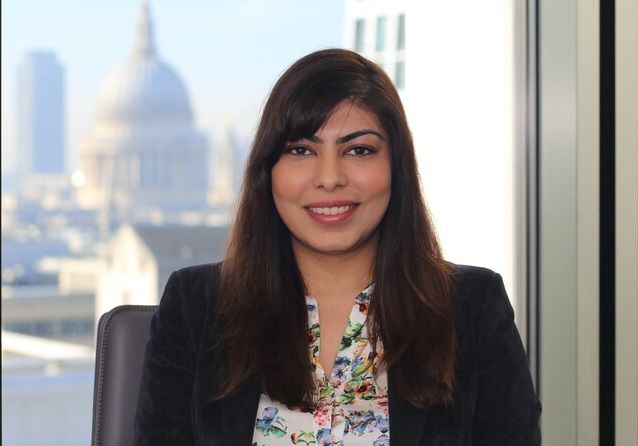
Discounted valuations, improving policy clarity and demographic tailwinds are strengthening the case for healthcare as investors look to diversify away from ever-concentrated technology exposure, according to Yashica Reddy.

This week FSA provides a quick comparison of two international equity funds: Artemis Global Income and Capital Group New Economy Fund.
This week FSA provides a quick comparison of two international equity funds: Artemis Global Income and Capital Group New Economy Fund.
FSA looks at the best performing global equity funds over June and July amidst a volatile unwind of a crowded artificial intelligence trade.
Buyback operations for longer-dated debt doubled.
Buyback operations for longer-dated debt doubled.

Fullerton Fund Management will provide the new wealthtech platform with SGD-denominated investment strategies.
Investors are looking beyond the initial winners of the artificial intelligence (AI) story.
The AI investment boom is entering a new phase as allocators focus increasingly on which companies can turn unprecedented spending into sustainable profits, as well as on which securities offer adequate compensation for financing it.
After the initial rally rewarded semiconductor and infrastructure providers, Templeton Global Investments sees investors becoming more selective rather than abandoning the AI theme.
In an investor note, the firm identified three distinct areas of opportunity: infrastructure providers such as chipmakers and data centres; hyperscaler platforms; and software companies developing AI-powered applications.
Semiconductors remain essential, but elevated valuations have made their shares more sensitive to questions about whether earnings can keep pace with expectations. This is encouraging some investors to shift towards hyperscalers and selected software companies that could monetise AI more directly, according to Templeton Global Investments.
“The market’s attention is gradually shifting from who is building AI to who can profit most from using it,” explained the firm in its note.
Yet the scale of spending required to deliver those profits is creating another challenge.
According to Enrico Chinello, next generation research analyst at Julius Baer, hyperscaler capital expenditure is set to exceed $750bn this year and $1trn annually in both 2027 and 2028.

And while strong second-quarter results have helped ease concerns about AI demand, Chinello believes the focus is shifting towards returns on those investments.
Revenue benefits are already emerging, particularly in cloud computing, but the impact on profitability could take longer. Free cash flow is expected to come under pressure and potentially turn negative in 2027 before rebounding in 2028, which Julius Baer sees as an important inflection point for bottom-line monetisation.
“The key risk is not that demand weakens; it is whether investors will continue to reward such spending,” said Chinello.
At the same time, he believes the flywheel is accelerating, and remains constructive on the cloud computing theme.
The financing boom is simultaneously reshaping fixed income markets – creating what RBC BlueBay Asset Management believes could become a substantial new source of alpha.
AI represents “one of the most significant capital formation cycles in modern economic history”, according to Andrzej Skiba, head of US fixed income at RBC BlueBay.
As financing expands beyond hyperscaler balance sheets into high yield (HY), leveraged credit and securitised debt, the resulting supply could push spreads wider and create an “AI supply premium” for investors.
RBC BlueBay expects the AI debt financing market to grow beyond $2trn in the coming years, potentially creating an investable universe larger than the entire US HY market today.
Heavy issuance has already contributed to wider spreads across AI-related investment grade and HY debt as borrowers offer larger concessions to attract increasingly supply-conscious investors.
RBC BlueBay is moderately overweight AI-related credit as valuations become more attractive, but Skiba stressed that investors need to distinguish carefully between structures.
The manager is underweight most high-quality hyperscaler debt, while favouring selected datacentre transactions with fully amortising structures or strong residual value guarantees. Within HY, it prefers deals likely to be refinanced once projects are completed.
“We want to size our positions conservatively, run a diversified book of holdings and avoid at all costs weaker structures irrespective of their valuation appeal,” Skiba said.
Across both equities and bonds, the message is increasingly similar: enthusiasm for AI remains strong, but as the investment cycle matures, simply gaining exposure to the theme may no longer be enough.
This week FSA provides a quick comparison of two international equity funds: Artemis Global Income and Capital Group New Economy Fund.
The Hong Kong-based investment firm said its investment profits were driven by private equity, special situations, structured credit and hedge funds.
Discounted valuations, improving policy clarity and demographic tailwinds are strengthening the case for healthcare as investors look to diversify away from ever-concentrated technology exposure, according to Yashica Reddy.