Central banks diversify amid stagflation fears – UBS AM survey
However, reserve managers still expect strong global equity market performance, according to the latest UBS Asset Management survey.


However, reserve managers still expect strong global equity market performance, according to the latest UBS Asset Management survey.
However, reserve managers still expect strong global equity market performance, according to the latest UBS Asset Management survey.

Healthcare’s defensive qualities and non-discretionary demand make it more relevant than ever, according to asset managers.
Building strong relationships with clients is crucial to providing tailored recommendations, says Adrien Lalau, head of investment funds advisory, Asia at BNP Paribas Wealth Management
Building strong relationships with clients is crucial to providing tailored recommendations, says Adrien Lalau, head of investment funds advisory, Asia at BNP Paribas Wealth Management

Several additional Hamilton Lane evergreen strategies to be distributed globally via iCapital’s Global Marketplace.
Sponsored by Loomis Sayles & Natixis
The Growth Equity Strategies Team at Loomis Sayles, an affiliate of Natixis Investment Managers, demonstrates that patience, discipline and conviction result in consistent, peer-leading risk-adjusted compounding over cycles.
The launches reflect the evolution of fixed income from a purely defensive allocation, according to the team.
Building strong relationships with clients is crucial to providing tailored recommendations, says Adrien Lalau, head of investment funds advisory, Asia at BNP Paribas Wealth Management
However, reserve managers still expect strong global equity market performance, according to the latest UBS Asset Management survey.
However, reserve managers still expect strong global equity market performance, according to the latest UBS Asset Management survey.
Healthcare’s defensive qualities and non-discretionary demand make it more relevant than ever, according to asset managers.
However, reserve managers still expect strong global equity market performance, according to the latest UBS Asset Management survey.
However, reserve managers still expect strong global equity market performance, according to the latest UBS Asset Management survey.

This week FSA compares two emerging market equity funds: the Ninety One Emerging Markets Equity fund and the Templeton Emerging Markets fund.

Half of advisors surveyed in Apac view artificial Intelligence (AI) as potentially turning self-directed investors into their biggest competitive threat.
Half of advisors surveyed in Apac view artificial Intelligence (AI) as potentially turning self-directed investors into their biggest competitive threat.

Roughly 50% of respondents in Schroder’s Global Investor Insight survey said they were concerned about a downturn or recession.
But investors may have a good reason to be cautious about the recent beneficiaries of the artificial intelligence buildout.

Investors are still underestimating the scale of the artificial intelligence (AI) infrastructure buildout, despite ongoing debate surrounding a bubble in AI stocks.
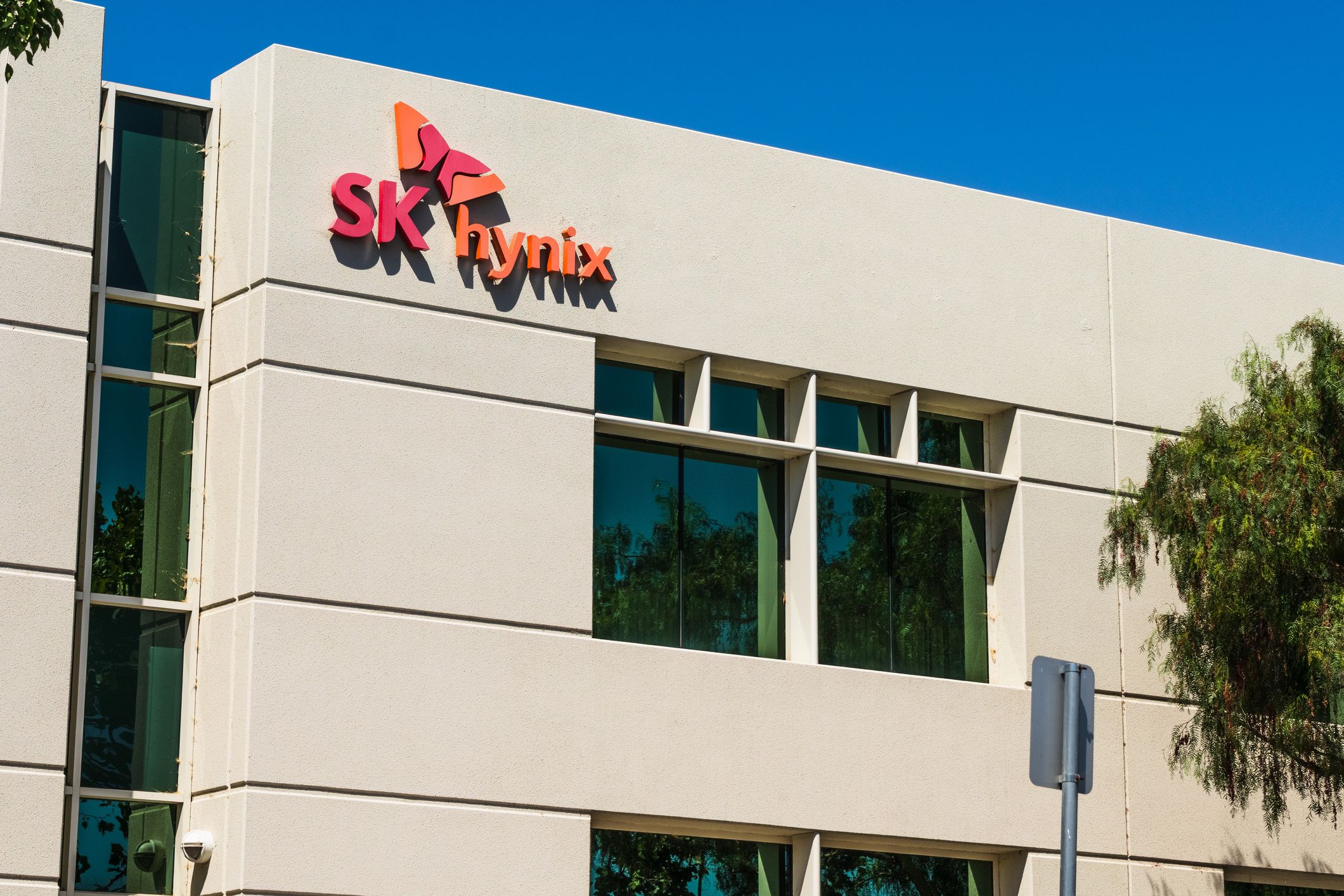
One symptom of this can be seen in the blistering rally of memory chipmakers such as Micron, SK Hynix, and SanDisk, which are up over 840%, 875% and 4,500% respectively during the past year.
While these companies are benefitting from a shortage in memory chips, much of the explosive rally can be traced back to markets downplaying demand for AI infrastructure.
But even as markets catch up to reality, investors are still too pessimistic, according to Yash Patodia, portfolio manager for Wellington Management’s Asia Technology strategy and co-leader of the firm’s global technology investment platform.
“AI infrastructure has been surprising the market on the upside, and we believe that’s going to continue to be the case,” he told FSA in an interview.
“As long as these AI models continue to get better, capabilities improve, more compute is only going to make them more capable,” he said. “I think that’s the main factor that the market has gotten wrong, and I think somewhat still gets wrong.”
The insatiable demand for AI compute has helped two of the biggest memory chip manufacturers in the world, SK Hynix and Samsung, catapult South Korea to become the seventh largest stock market globally, surpassing the UK and Canada.
“Memory, of course, is an integral part of compute,” Patodia said. “This goes into why we’re overweight [memory chipmakers] right now.”
“There is only so much supply, demand is going through the roof, and it takes time to build out clean room space – there is no clean room space available.”

“They [memory chipmakers] are trying to build out more, and it’s going to take them years to do that.”
He said that if the demand continues to exceed supply, memory prices will likely continue to stay elevated and memory chipmakers will continue earning blockbuster profits.
However, he warned that “it’s possible that at some point you start to see that supply and demand match more”.
“There will be parts of this memory ecosystem that won’t be able to sustain so much pricing power,” he said.
“They would see so much demand come in at a high price, then more projects become feasible and therefore you add more capacity. When you add more capacity, pricing will go down.”
Indeed, investors have long been sceptical about the earnings power of memory chipmakers, given a history of volatile downcycles and the fact that memory chips are still a commodity.
“I think that’s the mindset that one has to be careful about, because if you solve the capacity problem for memory, for example, then suddenly these equities won’t look as attractive,” Patodia said.
Given that Samsung and SK Hynix together now account for almost 50% of the KOSPI index, Patodia warned that passive investors focused on big benchmark names with memory chipmakers are therefore “taking some of that inherent price risk”.
However, even if memory prices do come down, Patodia is optimistic on the overall AI buildout and believes comparisons to the fibre optic buildout of the dotcom bubble and crash are mistaken.
“I think of the telco buildout as building out for possibility, versus AI building out for capability,” he said. “The fibre buildout was like building a really wide highway, and hoping more cars will come. If they don’t come, then, oh no, we overbuilt.”
“Whereas, for AI, you’re building capability. It’s more like the horsepower in an engine. So the more compute that there is, the more horsepower the engine has. So you will go faster.”
He argued that building out more compute could almost be treated like a variable cost as opposed to thinking of it as a fixed cost.
“If it’s a variable cost, and you believe that the world is going to need more and more intelligence, you’re going to need more compute,” he said.
“The more compute you add, the more intelligence you create, and the more intelligence you create, you exponentially add more value to society,” he said.
Although he admitted the math on this logic can be a bit “fuzzy” he pointed to the rapid growth of Anthropic as a case in point.
He said: “They’re not releasing their model because they’re compute constrained. Whereas if you take the telecom period, you had all this fiber laying out, which was like 95% dark.”
“Right now, all GPUs are being used and some of the older GPUs are actually worth more today than a few years ago. So we’re in a very supply constrained environment.”
One thing that should concern investors is the possibility of a slow adoption of AI due to human friction, according to Patodia.
He said: “All the capex that is being put in, all this intelligence that we are creating, in my view, ultimately, has to be a substitute or a complement to labor.”
“That’s the only way you can actually justify all this investment coming in. I believe that is the goal of most of these AI labs: how do we basically make an agent the equivalent of having a full-time employee? That is the big value unlock.”
“My worry is that we have a mismatch where demand or adoption within enterprise is a little slower than expected, and the market sees that and starts freaking out and says ‘oh this is overbuilt’, and the whole narrative from the 2000s comes back in.”
Patodia also cautioned a similar market overreaction to a drop in memory chip pricing where extra capacity causes investors to extrapolate that there has been an overbuild.
However, if this were to happen, Patodia would view a sell-off as an opportunity because in his view, this scenario would mean adoption is more delayed versus cancelled.
However, reserve managers still expect strong global equity market performance, according to the latest UBS Asset Management survey.
Healthcare’s defensive qualities and non-discretionary demand make it more relevant than ever, according to asset managers.
The launches reflect the evolution of fixed income from a purely defensive allocation, according to the team.