Pictet AM’s Wigley: Investors yet to recognise infrastructure’s growth inflection
Infrastructure equities are seeing a growth inflection not yet recognised by the market, according to James Wigley, portfolio manager at Pictet Asset Management.


Infrastructure equities are seeing a growth inflection not yet recognised by the market, according to James Wigley, portfolio manager at Pictet Asset Management.
Infrastructure equities are seeing a growth inflection not yet recognised by the market, according to James Wigley, portfolio manager at Pictet Asset Management.

The strategy focuses on Asian technology innovators.
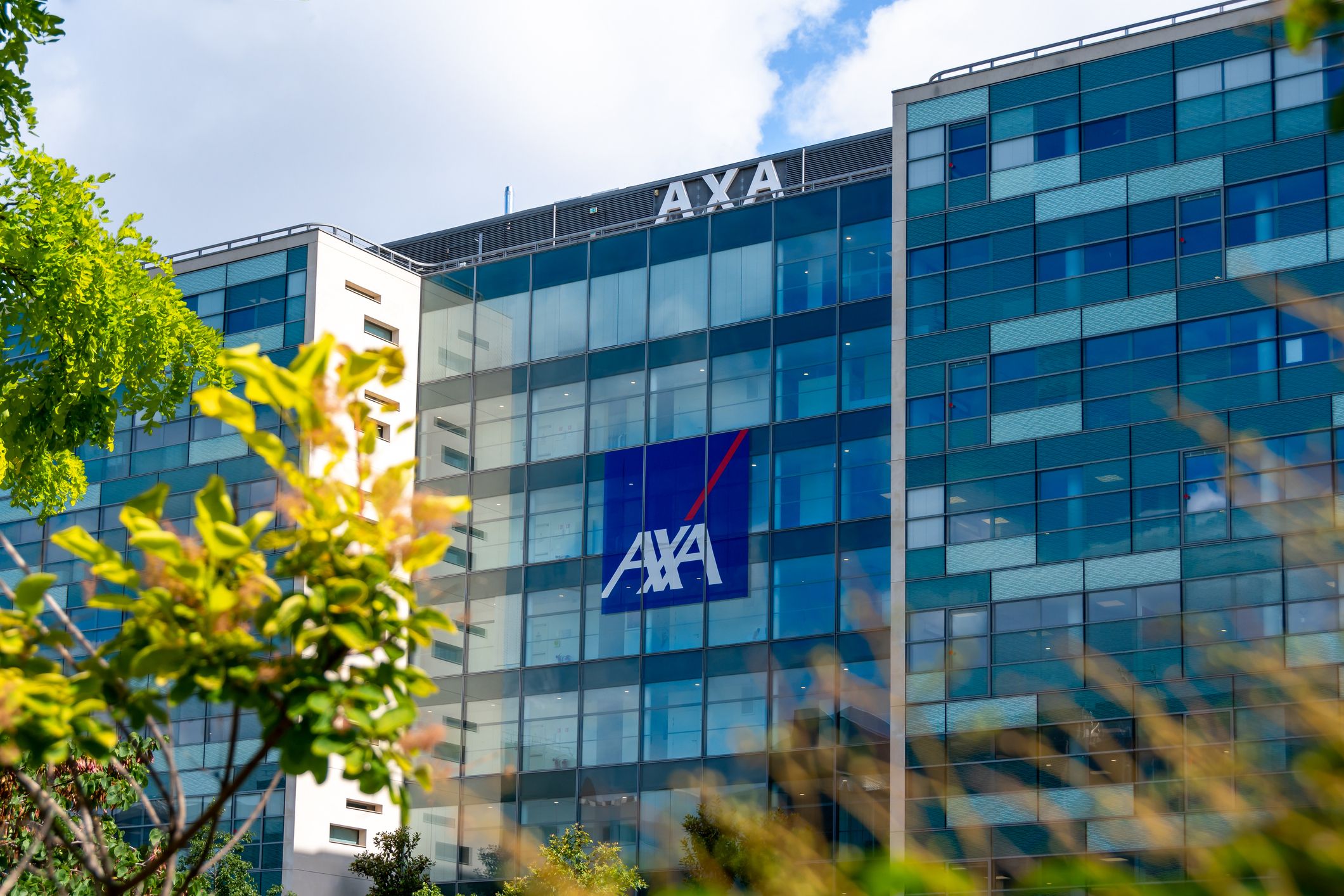
AXA will continue its partnership as a principal investor in Ardian’s funds, as existing shareholders increase their stake in the firm.
AXA will continue its partnership as a principal investor in Ardian’s funds, as existing shareholders increase their stake in the firm.

88% of strategists believe productivity gains from AI will translate into higher corporate profits.

Sponsored by Loomis Sayles & Natixis
The Growth Equity Strategies Team at Loomis Sayles, an affiliate of Natixis Investment Managers, demonstrates that patience, discipline and conviction result in consistent, peer-leading risk-adjusted compounding over cycles.
Infrastructure equities are seeing a growth inflection not yet recognised by the market, according to James Wigley, portfolio manager at Pictet Asset Management.
AXA will continue its partnership as a principal investor in Ardian’s funds, as existing shareholders increase their stake in the firm.
Infrastructure equities are seeing a growth inflection not yet recognised by the market, according to James Wigley, portfolio manager at Pictet Asset Management.
Infrastructure equities are seeing a growth inflection not yet recognised by the market, according to James Wigley, portfolio manager at Pictet Asset Management.

The region will enjoy organic growth, fuelled by an expanding middle class and pension reforms.

Multi-asset funds remained the strongest-performing asset class during the first half of this year.
Multi-asset funds remained the strongest-performing asset class during the first half of this year.

This week, FSA provides a quick comparison of two Indian equity funds: Jupiter India Select and FSSA Indian Subcontinent.

The Baillie Gifford Enhanced Yield fund invests in short-dated government and corporate bonds.
The Baillie Gifford Enhanced Yield fund invests in short-dated government and corporate bonds.

Funds from Wellington Management, Allianz GI, Barings and iShares are highlighted by Morningstar.
AI improves efficiency but doesn’t determine investment decisions, says Manulife IM’s CIO Colin Purdie.


Artificial intelligence (AI) is already changing and improving operations in many industries, and its rapid evolution is likely to have a significant impact on current and future adopters. Investment management is clearly among those industries that is embracing its potential.
“AI is central to our investment management, supporting data processing and informing decision-making,” Colin Purdie, global chief investment officer, public markets, told FSA in a recent interview.
“We use AI to process large volumes of data, which is an essential component of our investment research and analysis.”
Manulife Investment Management (IM) began its initiative to incorporate AI 12-to-18 months ago, with defined objectives and a structured plan, although as a group, Manulife has been actively investing in and scaling its AI capabilities since 2016.
The Toronto-based asset manager chose not to use off-the-shelf or isolated AI systems but instead assembled analysts, AI specialists, data experts, and investment staff to develop tailored strategies.
“Our talent pool of almost 200 global data scientists and machine learning engineers is embedded with the business and functions, allowing them to craft a roadmap of use case opportunities to deliver business value from AI solutions at pace,” Purdie (main picture) said.
To identify the most valuable AI applications, Manulife IM reviewed its regular tasks and pinpointed the most challenging. For instance, when an analyst needed to make 18 company calls in one night, the firm created a tool to read transcripts and enable rapid searches.
“Our AI Research Assistant leverages traditional machine learning, generative AI, and agentic frameworks built upon foundational large language models provided by our cloud partners,” Purdie said.
Among Manulife IM’s AI tools is “Dora” (Document Research Analyst), a daily document research tool that lets the team control information sources. Documents are uploaded for AI-based analysis, ensuring the tool uses only trusted, confidential information.
Dora can also incorporate research from reputable brokers and company news sources, allowing it to analyse and cross-reference multiple inputs. Manulife IM’s team manages Dora internally, helping it to maintain control and flexibility.
“We upload balance sheets, income statements, cash flow statements, and historical reports into Dora. The tool answers questions, generates data tables, and reviews information efficiently,” said Purdie.
For example, around Liberation Day in April 2025, Manulife IM’s US consumer equity analyst used the AI tool to quickly process multiple company statements, something that had previously been infeasible.
“The analyst uploaded documents, used Dora to inquire about the tariff’s impact, and generated a data table summarising company statements. The tool sorts and prioritises data by criteria such as relevance or impact, reducing a task that once took a day to about an hour,” Purdie said.
However, AI outputs do not directly determine investment decisions. The tool accelerates initial analysis, allowing the team to gather data before applying human judgment.
“Final decisions remain with the team, in line with our clients’ preference for a human-driven, bottom-up approach,” Purdie said. “AI facilitates decision-making but does not replace the human element.”
Feedback indicates that Manulife IM’s clients want increased AI use but also assurance that investment decisions remain personal. Most of its clients are retail customers, followed by retirement and institutional clients.
“Overreliance on AI may lead clients to question our value, so we demonstrate our expertise by selectively using AI tools,” Purdie concluded.
Multi-asset funds remained the strongest-performing asset class during the first half of this year.

The world’s largest asset manager saw $192bn of net inflows in the second quarter of 2026, driven by ETFs, private markets, and systematic equity strategies.
This week, FSA provides a quick comparison of two Indian equity funds: Jupiter India Select and FSSA Indian Subcontinent.